







|
Ежемесячные денежные переводы в Непале впервые превысили 200 миллиардов рупий
|
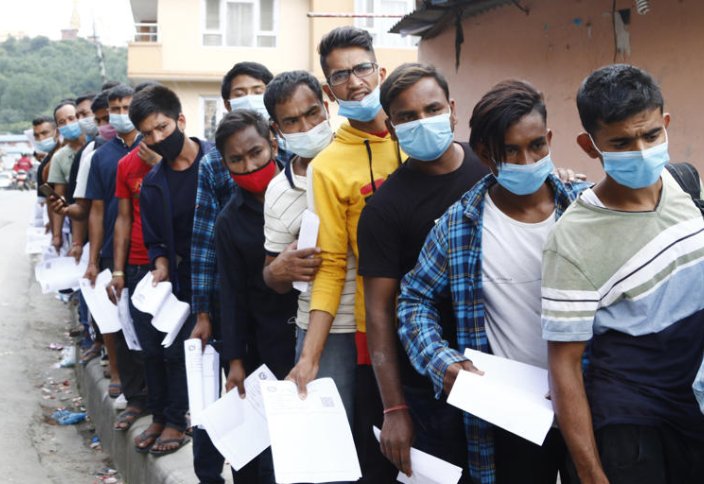
Ежемесячные поступления денежных переводов в Непал впервые превысили отметку в 200 миллиардов рупий, в основном благодаря усилению доллара США и ужесточению мер по борьбе с отмыванием денег (AML), которые повысили прозрачность и безопасность денежных переводов.
Отчёт, опубликованный центральным банком Непала в воскресенье, показывает, что денежные переводы достигли 201,22 миллиарда рупий с середины сентября по середину октября, по сравнению с 144,17 миллиарда рупий за аналогичный период прошлого года.
Рекордный приток отражает сезонный рост во время крупных праздников — Дашейн, Тихар и Чхат — когда непальцы за рубежом обычно отправляют больше денег домой. Экономисты отмечают, что почти 40 процентов ежегодной экономической активности, связанной с ВВП, приходится на этот праздничный период.
Поступления денежных переводов выросли на 35,4 процента до 553,31 миллиарда рупий в первом квартале финансового года 2025-26 по сравнению с ростом на 11,9 процента за аналогичный период прошлого года.
В основе этого роста лежало сочетание факторов: рост оттока на фоне скудности рабочих мест внутри страны, вялая экономика, политическая неопределённость и укрепление доллара США.
Только в первом квартале 200 716 непальцев покинули страну с разрешениями на работу — это рост на 18 процентов в годовом выражении, эквивалентный почти 2 230 выездам в день. Эта цифра не включает студентов и посетителей.
Экономисты предупреждают, что при застойной производственной базе, слабом экономическом росте и постоянной политической нестабильности безработица может вырасти ещё больше, ускоряя отток молодых работников в ближайшие годы.
Отчёт центрального банка показывает, что 123 459 человек получили первое одобрение на работу за рубежом, а 77 257 продлили свои разрешения, всего за первый квартал было 200 716 выездов. Для сравнения, за тот же период прошлого года составило 170 593 ухода — 110 654 новичков и 59 939 продлений.
В прошлом финансовом году 839 266 непальцев уехали на работу за рубежом, из них 505 957 — впервые мигранты, и 333 309 — продлевающие сроки. Годом ранее их число составляло 741 297. Эти цифры не включают 119 409 непальских студентов, покинувших страну в 2024 году.
Несмотря на стремительный рост денежных переводов и растущий валютный резерв, притоки не привели к созданию рабочих мест внутри страны. Валовые валютные резервы достигли 2,97 триллиона рупий, что составляет 21,21 миллиарда долларов, что позволяет поддерживать импорт товаров и услуг в течение 16,4 месяца.
Business leaders say that although remittance inflows and investable capital in financial institutions have grown, low development spending and weak market demand have kept the economy sluggish. "Due to low development spending and weak demand, the economy remains slow," wrote Prabal Jung Pandey, executive director of Lomus Group, on Facebook.
Incentives for using formal channels have also shifted a large share of remittances away from informal networks towards regulated systems, ensuring better documentation and a clearer picture of the country's actual financial inflows.
Labour experts say the global market for Nepali workers is expanding, with a noticeable shift towards Western destinations rather than traditional Gulf countries. Stronger currencies-especially the dollar, euro and pound-have further boosted remittance earnings.
Digitisation has also played a crucial role. "One major change in remittance outflow is digitisation," said Jeevan Baniya, labour researcher and deputy director at Social Science Baha.
Until a few years ago, South Korea was considered a major source of remittances sent through hundi, an informal and illegal channel. In 2017, the International Organisation for Migration in Seoul told The Korea Times that more than 80 percent of Nepali workers in Korea used hundi to send money home, largely due to limited formal service options.
"Now, in South Korea, all kinds of banking services and peer-to-peer transactions have gone digital in a big way," Baniya said. "So money is coming through legal channels."
Baniya added that the rising number of Nepali students in Japan, Australia and Canada, along with higher basic wages in many labour destinations, has also contributed to increased remittance inflows.
Experts say strengthened AML compliance in recent years has improved trust in formal channels and will likely continue pushing more remittances into the official system.
According to Guru Prasad Paudel, spokesperson for Nepal Rastra Bank, three factors are driving the growth in remittances: rising outmigration, the appreciation of the US dollar against the Nepali rupee and the shift of Nepalis towards higher-wage destinations.
He said the Nepali currency depreciated 2.3 percent against the US dollar between mid-July and mid-October 2025. The buying exchange rate stood at Rs140.22 per dollar in mid-October, compared to Rs137 in mid-July.
"Yes, the rise in remittance has increased the country's foreign currency reserve, and the lack of spending capacity has also become a challenge. But this shows that opportunities are waiting for us," Paudel said.
"Our statistics show that the import of intermediate goods is rising, and this is a good sign," he added. Intermediate goods are producer or semi-finished goods used as inputs in the production of other goods, including final products. "The rise in these goods means we are adding value and exporting it."
The surge in remittances also coincides with heightened youth unrest at home. In early September, youth-led nationwide protests-spanning issues ranging from corruption and governance failures to unemployment and police accountability-disrupted businesses, caused huge losses to public and private property, and dented investor confidence.
Economists say the protests reflect deep frustration among young people with shrinking job opportunities in the domestic market. Political instability, repeated changes of government, stalled development projects and weak private-sector hiring have combined to limit employment growth.
For many young Nepalis, migration has become the only viable option for escaping instability and economic stagnation.
The continued failure of agriculture, manufacturing and services to generate meaningful employment reinforces the cycle: as instability fuels unemployment, more young people leave, and remittances rise-but at the cost of a depleted workforce, weakened productivity and long-term economic vulnerability.
Nepal's dependence on remittances has deepened to the point that it has effectively become a labour-exporting economy, with rural households in particular relying on at least one family member's income from abroad, according to the central bank study.
Political uncertainty, rampant corruption and poor accountability remain core obstacles to economic transformation, pushing both skilled and unskilled youth to leave in search of stability and opportunity elsewhere.