





|
Иностранные фирмы создали 25% выбросов от всех компаний в Китае за 20 лет: исследование
|
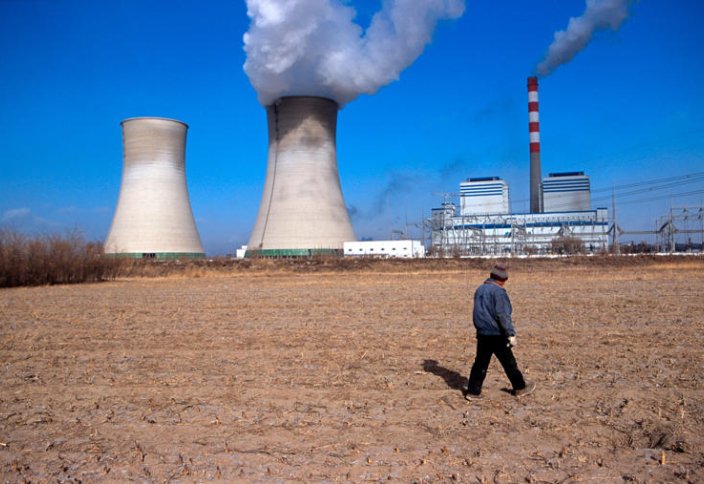
Восточный прибрежный регион получил больший экономический выигрыш, в то время как центральные и западные внутренние районы «испытывали более сильное давление на окружающую среду», говорят исследователи
Согласно новому исследованию, выбросы углекислого газа, производимые иностранными фирмами, составили около четверти от общего объема выбросов всех компаний в Китае за два десятилетия с 1997 года.
Также было обнаружено, что иностранные компании произвели более половины своих общих выбросов углерода в менее развитых внутренних районах Китая в течение 15 лет до 2012 года. Тем не менее, эти регионы не получали такой большой экономической выгоды от иностранных инвестиций, как прибрежные районы.
«Восточный прибрежный регион получил больше экономических выгод, в то время как центральные и западные внутренние регионы испытывали более сильное давление на окружающую среду», — говорится в заявлении ведущего института исследования, Академии математики и системных наук Китайской академии наук.
У вас есть вопросы о самых актуальных темах и тенденциях со всего мира? Получите ответы на эти вопросы с помощью SCMP Knowledge, нашей новой платформы тщательно подобранного контента с объяснениями, часто задаваемыми вопросами, анализами и инфографикой, предоставленной нашей отмеченной наградами командой.
«Это поднимает новые вопросы для научной оценки ответственности за выбросы углерода для предприятий, принадлежащих иностранцам», — добавил он.
Исследование было проведено учеными из академии, а также Нанкинского университета, Университетского колледжа Лондона и Бирмингемского университета. Они опубликовали свои выводы в рецензируемом журнале Nature Communications в прошлом месяце.
«МНК [многонациональные предприятия] представляют собой немалый, но часто упускаемый из виду фактор формирования углеродного неравенства», — говорят исследователи.
«Они усугубили растущее углеродное неравенство в Китае в период с 1997 по 2012 год, но впоследствии сократили его к 2017 году».
Исследование показало, что с 1997 по 2012 год внутренние регионы вносили менее 30 процентов экономической добавленной стоимости МНК, но на них приходилось более 50 процентов выбросов углерода, связанных с МНК.
«Этот дисбаланс усугубил региональное неравенство в этот период», — говорится в документе. «В период с 2012 по 2017 год произошли кардинальные изменения, поскольку МНК все чаще перемещались вглубь страны и расширяли свое присутствие в отраслях, требующих чистых технологий, что значительно сократило региональное неравенство».
Исследование показало, что выбросы CO2, производимые иностранными компаниями, выросли на 266 процентов с 1997 по 2017 год - с 744 миллионов тонн до 2,721 миллиарда тонн.
The emissions came from the production and supply of electricity, gas and water, as well as the processing of metals and fabricated metal products, transport, storage and post, and mining and extraction of crude petroleum and natural gas.
The CO2 emissions "[aligned] with their contribution to value-added creation", according to the paper.
China is the second-largest host country of foreign direct investment inflows and this has boosted economic growth including through new production activities and technology transfers.
"Investments from MNEs in China demonstrated a consistent upward trajectory from 1997 to 2017, significantly contributing to the country's explosive economic growth and increased CO2 emissions, particularly since China's entry into the World Trade Organization in 2001," the team wrote.
They said the economic value added by MNEs grew from around 1.6 trillion yuan in 1997 to almost 22 trillion yuan in 2017, with annual growth of up to 14 per cent.
"Despite certain fluctuations over the 20 years, MNEs consistently contributed a significant proportion of China's national value-added, underscoring their enduring and substantial influence in China's economy," they said, with the figure standing at more than a quarter of national economic value added after China joined the WTO.
Comparing different regions of the country, the team found unequal value-added and CO2 emissions.
Eastern China - in a favourable location, with preferential policy support, a robust business environment and well-established industrial systems - gained around 70 per cent of China's total economic value added by MNEs while being responsible for around 50 per cent of the total emissions.
On the other hand, inland provinces in central and western China, far from the coast, had less than 30 per cent of the total economic value added by MNEs but were responsible for more than 50 per cent of their total emissions.
"Due to constraints such as high transportation costs, limited industrial foundation, and suboptimal policies, these provinces were not focal points for MNEs, leading to low direct contributions," the paper said.
"However, these provinces played a crucial role as essential suppliers of natural resources and upstream intermediate inputs which are more carbon-intensive. This enabled them to emit substantial indirect CO2 for MNEs located in eastern provinces through interregional industrial linkages."
In the decade from 2007, MNE contributions to local economic value added rose in most central and western provinces, with notable increases in southwestern regions like Sichuan, Chongqing and Guizhou as more foreign direct investment moved inland.
"As industries matured, policies became more refined, and transportation infrastructure improved, a growing number of central and western provinces actively engaged in MNE-related activities," the researchers said.
First author of the study Tian Kailan, an associate professor at the CAS Academy of Mathematics and Systems Science, noted the challenges of global industrial chain restructuring.
Given this, he said it was important to guide foreign firms, advanced tech and labour-intensive industries towards the central and western regions.
"We should break down regional barriers and build a unified national market to foster cross-regional flow of foreign investment," he said in the statement.
In the paper, the team urged inland provinces to "improve their governance practices to cultivate a favourable business environment and augment incentives such as fiscal and taxation support to attract foreign investors".
Nationwide, it said foreign companies might shift investment and their headquarters out of China due to "rising labour costs, geopolitical uncertainties, and concerns about the health of China's economy".
To prevent an "excessive exodus" and lure more foreign investment, they called for stronger political and economic ties with the United States, Europe and other countries.
More Articles from SCMP