




|
На золотых приисках Зимбабве, где мужчины рискуют быть похороненными заживо за несколько долларов
|
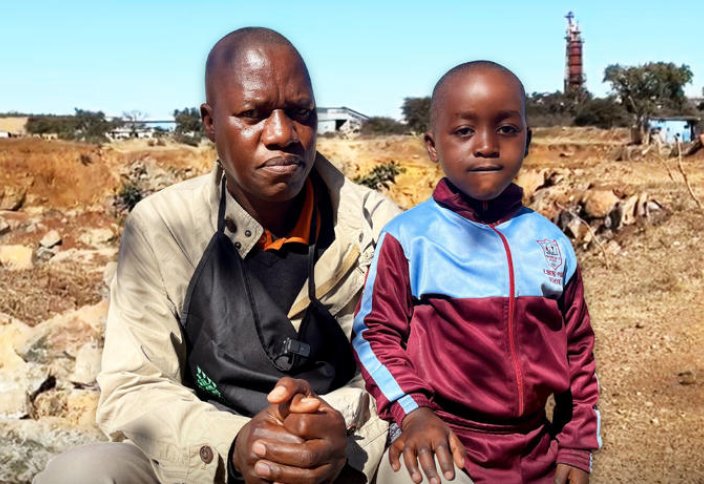
Репортаж из Зимбабве ведет иностранный корреспондент Metro Гергана Крастева
Капли пота стекают по лбу Гилберта Нуову, когда воспоминания о работе на одном из золотых рудников Зимбабве возвращаются.
Более года назад отец двоих детей дезертировал с работы после того, как его коллега был убит, когда стены ямы обрушились, похоронив его заживо.
«Мой друг погиб на месте. Я боялся за свою жизнь, поэтому вернулся домой», — рассказывает он Metro.
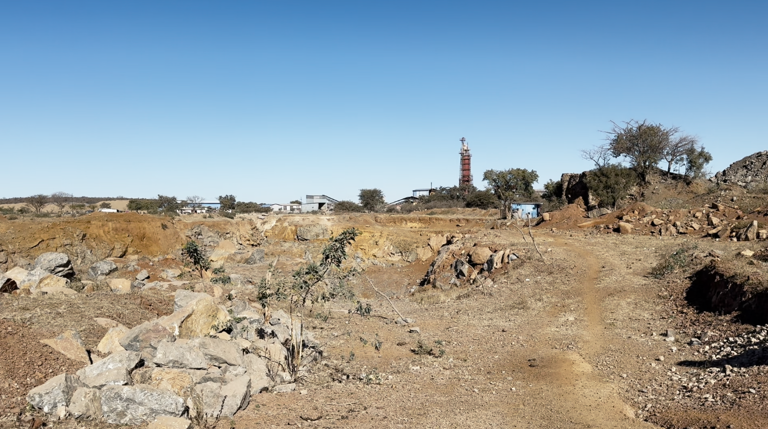
Дорога в Северный Матабелеленд, в 150 милях от города Булавайо, неровная и покрытая пылью, но я уверен, что в конечном итоге она приведет к золотому руднику.
Это один из многих ценных материалов, ради которых здешняя земля эксплуатировалась еще до британского колониального правления, а первая добыча была произведена еще в 14 веке.
Пока наш внедорожник ползет вперед, вдоль тротуара тянется очередь рабочих — мальчики, едва достигшие подросткового возраста, и обветренные мужчины в три раза старше их.
Большинство из них одеты в одни и те же выцветшие синие комбинезоны и с сколотыми лопатами на плечах — признак того, что они работают на одной из легальных шахт.
Северный Матабелеленд расположен на одних из самых богатых месторождений золота в Африке, и поэтому страдает от кустарных карьеров, которые официально не зарегистрированы в правительстве, что делает их незаконными.

Тем не менее, десятки тысяч мужчин и женщин вынуждены заниматься торговлей из-за безработицы, составляя большинство рабочей силы в горнодобывающей промышленности.
«Трое моих друзей погибли в шахтах»
Гордон Сибанда когда-то был одним из них.
Metro беседует с ним в начальной школе Либени, где он добровольно выступает в качестве шеф-повара, чтобы внести свой вклад в местное сообщество во время поиска работы.
Сидя на деревянном бревне и разглаживая свой фартук для приготовления пищи, он признается, что бедность — это то, что заставило его заняться добычей полезных ископаемых в 2001 году, когда ему было 39 лет.
Он говорит: «Друг познакомил меня с этим ремеслом. Многие из моих друзей до сих пор находятся в ямах.
«Добыча полезных ископаемых — это тяжелый труд. Вы можете потратить месяцы на поиски минерала, который вы не видите и не знаете, есть ли он на самом деле в земле.
— А когда удача окажется на нашей стороне, ты можешь что-нибудь получить.
In Zimbabwe’s mines, death never seems far.
So when I ask Gordon if any of his colleagues were injured or killed in the pits, he replies, almost nonchalantly, as he takes off his woolen beanie: ‘Ah yes. Three have been killed when the mines collapsed. ‘
Disintegrated shafts, explosions, flooding – each shift carries the chance that a worker will not return home.
As many as 237 people died in incidents in 2023, making it one of the very worst years in the country’s mining history.
And up until May this year, 59 fatal incidents were reported – most in illegal mines, like the one that Gordon worked in.
To fully comprehend the vast scale of illegal mining, Metro sits down with Pumulu Masu, government school inspector, who says that most people in Matabeleland North dig without a permit, which means the state does not ‘profit’ from it.
‘Mostly, people in the area mine illegally,’ she explains. ‘Let’s say there is an agricultural field. Instead of a farm, they will turn it into a mine.
‘Even in their personal properties – behind their homes – people start to dig.
‘We can always tell by the maps of soil. If people suspect there is gold, they will always dig no matter what the land is.’
While Gordon worked in an illegal pit, Gilbert has experience in a registered mine.
Their only piece of advice – what they want everyone to know – is ‘do not do it, do not work in a mine,’ pointing to how deadly the trade is.
Gilbert says: ‘The pit is not that strong as miners often dig tunnels [without much planning], making the walls weak.
‘We are not given helmets or boots to protect us. It is difficult to survive.
‘The work is just too much. In mines, there are no set working hours.You work and you stop when it is time to eat, then you go back to work. It is continuous, we do not stop.’
Эксплуатация труда и низкая оплата труда в шахтах
In Zimbabwe, mining runs through generations like a vein of gold itself. It is often seen as a rite of passage for children as young as nine, and at the same time a lifeline for families in the depths of poverty.
Though the pay is still meagre. All the money Gordon earned was spent on food for his large family, all 13 of them.
At the time, he was the sole breadwinner for his wife, three sons and three daughters, his own parents and siblings.
‘Hand to mouth, nothing else [is left],’ he adds, gesturing at his grandson, a four-year-old boy playing with his friends a few metres away.
Yet, despite facing unemployment, Gordon has not given mining another thought because of the precarious conditions.
Like him, Gilbert also did not live a life of luxury – but he was under no such illusions when he picked up a shovel.
After three months of digging, he was paid around $20, and only after gold was actually discovered. Miners divvy up half the proceeds, while the rest goes straight to the owner’s pocket.
There are other dangers too.
The industry has long been linked to human rights abuses, environmental violations and labour exploitation, particularly in lithium mines operated by China, despite denials by Zimbabwe’s government. About 70% of all lithium is processed there.
Robert Mugabe’s successor, president Emmerson Mnangagwa, of ZANU-PF, has so far supported the takeovers, arguing they will bring economic growth.
Perhaps this has materialised in the capital, Harare; yet, on the ground, in Matabeleland North, the mines have brought little benefits – if any – to the local community.
Внутри одного из старейших золотых рудников Зимбабве
Metro gained access to Turk, one of the oldest gold mines in Zimbabwe, located in the Bubbi District.
Armed security usually guard gold mines, but today luck has fallen on our side – at least for a few minutes.
Piles of reddish earth and stones mount inside the compound. A dragline excavator in the distance seems to have dosed off, but only momentarily.
The mine itself gapes before us, an abyss carved so deep and wide that, when peering over the edge, the bottom is not visible.
Across the road from the pit, a supermarket and two bars stand shoulder to shoulder, their doors flung wide open. A few men have gathered around a plastic table, kicking dust with their feet as they chat.
This is the heart of what is accepted as the traditional mining community in Zimbabwe.
There are no clinics or schools, or in fact any other reliable infrastructure apart from the mine.
Злоупотребление алкоголем широко распространено в шахтерских общинах
Bars are always the first to spring up whenever gold is unearthed, offering miners a place to unwind and spend their hard-earned cash in.
As I come to learn, this has also led to alcohol abuse among workers who use drinking as a coping mechanism.
A source, who wished to remain anonymous, tells Metro: ‘You cannot put a figure on how many people have died because of it. Some have been found dead on pavements.’
Workers’ deaths are often blamed on the rise in popularity of an illicit brew called ‘krango’, which can cause severe organ damage, and is associated with soaring rates of binge drinking.
My source explains that it is mostly made from ethanol concentrate diluted with large amounts of water, adding: ‘Krango is what it is all about in rural areas. It is packed in bottles of 250ml.
Каковы последствия санкций для Зимбабве?
Санкции в отношении Зимбабве были впервые введены в начале 2000-х годов, в основном Великобританией, ЕС и США, на фоне обвинений в нарушениях прав человека, фальсификации выборов и программе земельной реформы Роберта Мугабе.
Эти меры не являются широкими торговыми эмбарго. Они сосредоточены на замораживании активов и запрете на въезд высокопоставленных правительственных чиновников, связанных с государством.
В 2001 году США также приняли Закон о демократии и экономическом восстановлении Зимбабве (ZDERA), который ограничил их доступ к международным финансовым институтам.
В то время как санкции нацелены на политическую элиту, правительство Зимбабве утверждает, что они отпугнули иностранные инвестиции и ограничили кредитные линии – настолько, что нынешний вице-президент Константино Чивенга заявил, что страна потеряла более 150 миллиардов долларов.
‘Some are even packed by legitimate companies. It is sold for just $0.50, and the strength is usually around 40% strength.’
Настоящие благотворители природных богатств Зимбабве
Despite the reported issues plaguing Zimbabwe’s mines, the government is hellbent on expanding the industry – the faster, the better.
For a nation that fought so hard to rid itself from colonial rule, it now relies on investors from China, South Africa, Australia, Canada and the UK, and it is eager to attract more.
The sector as a whole accounts for more than 60% of export revenues and 13% of gross domestic product (GDP), according to national statistics from 2023.
To increase those numbers, the Zimbabwean government introduced the ‘Vision 2030’ plan to become an upper-middle-income economy by the end of the decade.
Supposedly, one of the key objectives is to grow the mining sector to have a revenue of $12 billion per year.
It makes money, that is for sure, though not for the small miner like Gordon or Gilbert.
They are currently unemployed and living with the memories of the hell inside the mines.
Метро отправилось в Зимбабве с помощью Mary's Meals, шотландской благотворительной организации, которая кормит детей в стране.