




|
Пакистан: На кладбище для жертв «убийств чести»
|
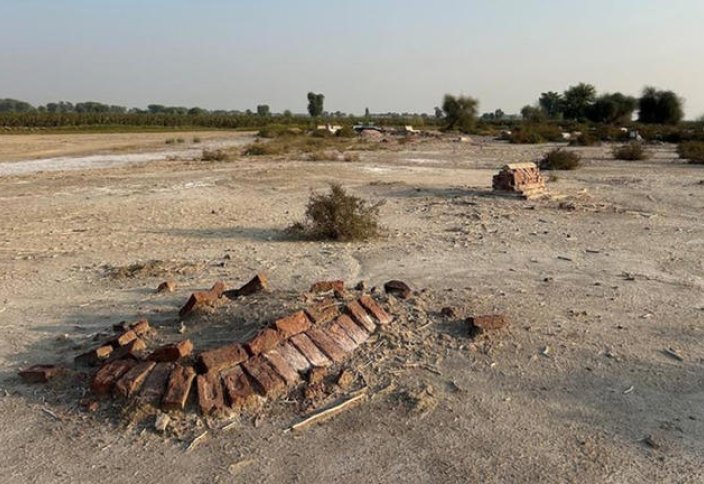
В Пакистане сотни женщин ежегодно погибают после того, как их обвинили в «бесчестии» своих семей. DW присоединилась к пакистанской активистке за права женщин, чтобы посетить кладбище в провинции Синд, где хоронят жертв.
Фатту Шах — отдаленная деревня на севере пакистанской провинции Синд. Поездка из ближайшего города, Готки, занимает больше часа. Дорога сужается, прорезая хлопковые поля и петляя вокруг глиняно-кирпичных домов, разбросанных по бесконечным участкам сельскохозяйственных угодий.
Это путешествие, которое Аиша Дареджо совершала бесчисленное количество раз. В течение последних 15 лет она исследовала то, что местные жители называют «кладбищем для обесчещенных женщин».
"Каждая могила раскрывает историю женщины, которую заставили замолчать", - сказала Дареджо DW.
На месте захоронения жертв убийств «чести» нет надгробий и названий. Некоторые могилы отмечены битым кирпичом, вбитым в землю, но на большинстве вообще ничего нет — разительный контраст с соседним главным кладбищем.
Дареджо объясняет, что жертвам убийств чести, как женщинам, так и мужчинам, не даруется достоинство даже после смерти. Их тела не омывают и не готовят к погребению. Здесь нет ни ритуалов, ни заключительных обрядов. Мертвых поспешно помещают в неглубокие ямы и засыпают грязью, чтобы отпугнуть животных.

Зарка Шар, местный активист из соседней деревни, один из немногих, кто готов говорить публично. Она рассказала DW, что кладбищу уже более ста лет.
"Район по-прежнему находится под сильным влиянием феодальных землевладельцев, которые контролируют занятость, заработную плату и средства к существованию", - сказала она DW.
Шар добавил, что в такой системе местные обычаи часто затмевают законы штата, а сомнение в укоренившихся практиках, таких как убийства чести, может подвергнуть жителей опасности, в конечном итоге укрепляя культуру молчания.
Убийства чести укоренились в обществе
Так называемые убийства чести – это умышленные убийства, совершенные родственниками жертвы, при этом родственники считают, что поведение жертвы навлекло позор на семью.
В Пакистане женщин и мужчин убивают за то, что они сами выбирают себе супругу, разговаривают с кем-то противоположного пола, вступают в брак с представителями другой касты или религии или демонстрируют поведение, которое обычно считается аморальным.
Data from the Human Rights Commission of Pakistan (HRCP) shows that in 2024, at least 405 people were recorded as victims of honor killings across Pakistan, with the highest numbers in Sindh and Punjab provinces.
The official numbers have remained consistent year on year, but researchers warn such crimes are often underreported and the real figure is likely to be much higher.
Dharejo said these killings in Pakistan have nothing to do with "tradition," apart from the fact that they have been going on for a long time. She also said the killings were often more transactional rather than being based on a ostensible sense of morality.
"Women's bodies become currency in negotiations between families and tribal courts, with killings often masking property disputes or enabling blood money exchanges," she explains.
Through her organization, "Sindh Suhai Sath," Dharejo has been documenting these cases and providing financial, legal and emotional support to survivors of honor-based and domestic violence.
«Он отнял у меня способность ходить»
One of these women is Sobia Batool Shah, who was 22 years old when six male relatives, including her estranged father, Syed, broke into her home in Naushahro Feroze, a city in Sindh province.
The father accused his daughter of bringing dishonor to the family by asking her husband for a divorce. In an act he called "justifiable," the men began attacking her. One used an axe to try and sever her legs.
"I will never forget that day. As they were trying to kill me, I screamed that I won't get a divorce to make them stop," Shah said. "They made me disabled and that is my greatest pain. They took away my strength to walk."
Shah told DW she has had four operations so far. Her legs remain in plaster, and she still uses crutches. When she attends court hearings on the second floor, her brother, Shawkat Ali Shah, carries her on his shoulders into the building.

Dharejo's organization supported Shah in filing three police reports against her father. He now sits in jail facing up to 14 years in prison. But Shah continues to fight for justice against her remaining attackers.
A case like Shah's can take anywhere from two to five years to reach a verdict. Dharejo says its important to preserve hope, as there are many instances where the law has ruled in favor of women.
«Он делал все возможное, чтобы вымогать у меня деньги»
At just 12 years old, Haleema Bhutto was married. Shortly after her wedding day, her husband, Shakil Ahmad, began demanding the property she had inherited from her late father.
After multiple refusals, he sent Haleema back to her mother's home in Ghotki, where she lived for the next eighteen years, caught in a limbo of being married but also abandoned.
Ahmad resurfaced, not to reconcile, but with an accusation that would serve as a death warrant in Ghotki's feudal society. He claimed she was having an affair with her brother-in-law.
"The allegation was completely false," Haleema told DW. "He wanted my property again and had found another way to get it. I belonged to a good and financially stable family. He was doing all he could to extort me, even if that meant killing me."
Haleema said the only way to save her life was to leave Ghotki and travel to Islamabad.
For more than fifteen months, Haleema sat in protest outside the Pakistani capital's Press Club talking to anyone that would listen. At times, she went on hunger strikes, accusing the government of inaction against the country's feudal elites. "I fought publicly so my husband could not kill me," she said.
Her struggle reached Pakistan's Supreme Court, where she won a historic decision in 2011.
The court granted her a divorce and restored the property her parents had left her. "This was not just my fight," she told DW last month from her home in Ghotki. "It was a fight for every woman who faces a similar situation, that you can have your rights, just don't give up."

Полиция заявляет, что убийства чести будут искоренены
At the Ghotki district police headquarters, DW spoke with Senior Superintendent of Police (SSP) Muhammad Anwar Khetran about the issue of honor killings.
"It is not honorable, it is disgusting, and it will be eradicated from society," he said.
However, he added that change will take a long time.
"In a generation or two," he said, the practice will cease entirely, with "change taking decades, not days."
He pointed to tangible progress in recent years with increased numbers of female officers, helplines, and women and child protection cells at police stations across the province.
Mir Rohal Khoso, SSP for Singh's Naushahro Feroze district, told DW that education and socioeconomic development will allow change to take place.
"When a woman is educated, and has her own economic independence, she knows her rights in the family," he emphasized.
Khoso added that in his district there has not been a spike in honor killings, crediting this to a strict crackdown and the enforcement of laws that regulate family disputes.
Activist Dharejo often works with police officers. Talking to DW, she commended their efforts, and echoed their comments on the need to educate and empower women.
But she said what's missing is confronting the feudal and patriarchal power structures that operate in Pakistan with impunity.
"Women stay in dangerous situations because they have no economic alternative," she said, adding that waiting for generational change, "ignores that violence serves those currently in power."
Dharejo, who accompanied DW to speak with police, said she will continue her work so that women do not end up in graveyards like the one in Fattu Shah or at least three other similar graveyards that exist in this part of the Sindh province.
Редактор: Уэсли Ран
Author: Sara Gill (Fattu Shah, Pakistan)