





|
Почему немецкая молодёжь принимает насилие и экстремизм
|
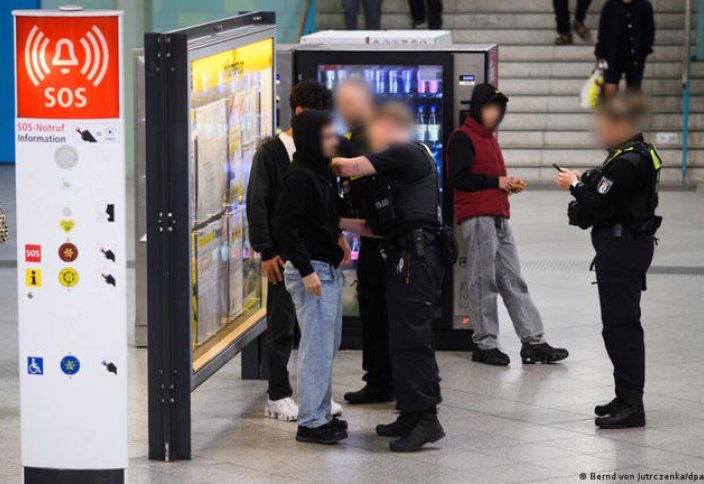
Многие молодые люди в Германии приняли религиозный и правый экстремизм. Что можно сделать, чтобы бороться с растущей радикализацией детей и молодежи?
В 2023 году 15- и 17-летний подросток замышлял нападение на рождественский рынок в Леверкузене (Северный Рейн-Вестфалия). В онлайн-чатах двое сторонников «Исламского государства» (ИГ), которую немецкая внутренняя разведка считает террористической организацией, планировали убить как можно больше людей, врезавшись грузовиком в толпу гуляков. За два дня до запланированной атаки подростков арестовали после того, как полиция узнала об их онлайн-чатах. Несовершеннолетние были приговорены к четырём годам лишения свободы в 2024 году.
Подобные случаи всё больше вызывают беспокойство в немецких силах безопасности. Федеральная уголовная полиция (BKA) уже много лет фиксирует рост насильственных преступлений. Число несовершеннолетних подозреваемых младше 18 лет увеличилось почти на треть с 2019 года, а число подозреваемых младше 14 лет даже увеличилось на две трети за тот же период.
В своём последнем отчёте по статистике преступлений полиции (PKS) BKA отмечает возможные причины такого развития: «Есть признаки того, что психологический стресс среди детей и подростков растёт уже несколько лет. Хотя психологический стресс не является прямой причиной преступного поведения, в сочетании с другими неблагоприятными факторами он может увеличить вероятность совершения (насильственных) преступлений.»
К таким «неблагоприятным факторам» относятся насилие в семье, отсутствие родительской любви, бедность и тревога, вызванные множеством кризисов, таких как война, изменение климата и пандемия COVID-19.
Радикализированы через TikTok и Telegram
The BKA considers minors who have fled their home countries to be particularly vulnerable. The young men planning the attack in Leverkusen had an Afghan and a Chechen background. The BKA report says that many lonely young immigrants look online for guidance and answers to their questions, noting that they often end up on the websites of religious or political extremists.
"In recent years, it has been observed that right-wing extremist violent crimes are often preceded by radicalization online," reads the 2024 report by the Federal Office for the Protection of the Constitution, Germany's domestic intelligence agency. This goes beyond the consumption of propaganda on platforms like Instagram and TikTok, but includes international networking with like-minded individuals on online channels such as Telegram or Discord.
Враги политических левых и ЛГБТК+ сообщества
The report cites as an example the group "Jung & Stark" (young and strong), which gained notoriety in 2024 through its Instagram account. "This right-wing extremist group, detached from existing regional and national right-wing extremist scenes, marks the entry point into right-wing extremism for many young people, some of whom are minors," the report states.
JS members are said to use ideological fragments to target "enemies" such as the left-wing "Antifa" and the LGBTQ+ movement.
The Berlin-based Violence Prevention Network (VPN) has been working with children, teenagers, and young adults for over 20 years. The non-governmental organization (NGO) is also an important partner for security authorities for developing deradicalization programs.
Drawing radicalized children and teenagers out of the confines of their virtual echo chambers is becoming increasingly difficult, says the VPN's Feride Aktas, who focusses on religiously motivated extremism.
She is critical of political and social discourse in Germany today. "We've reached a point where we're so distanced from one another that we first need to become capable of dialogue again," she says. It is important to avoid immediately pigeonholing young people when they make questionable statements, Aktas says, but suggests addressing the underlying emotions instead.
VPN's Managing Director Thomas Mücke agrees that communication with children and young people is key. He considers conversations with and between young people in a safe environment essential.
He recalls workshops held in schools where emotionally charged situations escalated quickly. "They can say things to each other that adults find difficult," Mücke recalls. But this then provides a starting point for discussion and allows them to open up to other perspectives. "If we lose this ability to communicate, then the extremists have won," Mücke concludes.
Когда семьи и школы терпят неудачу
Aktas also points out that the fallout of the COVID pandemic is still being felt today. Many young people have told her that during that time, no one was there for them — neither at home nor at school. Such girls and boys later feel lonely even when they are in a group, Aktas found. "And then they find connections elsewhere that can draw them into right-wing extremism or Islamist extremism in various ways," says Aktas.
Mücke also points to the fundamental problem that many parents fail to recognize the danger of their children's impending radicalization. He urges parents to contact counseling centers if they have any suspicion. "We look at the situation very closely and immediately engage in discussions with parents," Mücke says.
«Лица из группы высокого риска» и вернувшиеся из Сирии из ИГ
In the past ten years, the VPN has worked on 431 cases of youth who posed a threat to themselves and others. According to Mücke, 75 of them were "high-risk individuals" who pose a particularly high threat to public safety. Sixty-five of them were returnees from Syria, where they had joined the "Islamic State" (IS).
Mücke measures the success of his work by the recidivism rate — the percentage of individuals who are rearrested, reconvicted, or returned to prison after being released from a previous sentence —among the young people he's worked with. And the signs so far are encouraging: Of the 431 boys and girls his organization has work with, only two have relapsed.
Эта статья была изначально написана на немецком языке.
Пока вы здесь: Каждый вторник редакторы DW подробно рассказывают о происходящем в немецкой политике и обществе. Вы можете подписаться здесь на еженедельную рассылку Berlin Briefing.
Author: Marcel Fürstenau
Немецкие фирмы расходятся во мнениях о том, как взаимодействовать с крайне правой партией AfD
Ряд немецких компаний выходят из крупной бизнес-ассоциации из-за её стратегии переговоров с крайне правой партией AfD. В социальных сетях компании призывают занять твёрдую позицию против экстремизма.
Говорить или не говорить с крайне правой и популистской Альтернативой для Германии (AfD)? Это вопрос, который сейчас разделяет бизнес-сообщество Германии.
Дебаты начались ещё в октябре, когда бизнес-ассоциация Die Familienunternehmer (Семейные предприниматели) впервые пригласила представителей AfD на парламентский вечер в Берлине. По словам её президента Мари-Кристин Остерманн, ассоциация таким образом сняла национальный «запрет на контакты» с партии, которую немецкое национальное разведывательное агентство классифицировало как «крайне правую и частично правую экстремистскую».
«Мы, семейные предприниматели, не хотим правительства, включающего AfD», — говорится на сайте организации. «Мировоззрение AfD несовместимо с нашими фундаментальными убеждениями о свободе и рыночной экономике, поэтому мы, семейные предприниматели, не боимся обсуждать политику AfD.»
«Обсуждать с тем, кто думает иначе, — это не то же самое, что принять его позицию. Разговаривать не значит работать вместе.»
Остерманн сообщил немецкому общественному вещателю ZDF

что необходимо оспаривать партию её политику. Её популярность может снизиться, если людям покажут, что политики AfD часто придерживаются «пустой или противоречивой» политики, несмотря на их запоминающиеся лозунги.
Некоторые члены решают выйти из ассоциации
«Отзывы наших членов поддерживают наше решение», — написала ассоциация в Instagram, не раскрывая подробностей о степени этой поддержки. Die Familienunternehmer представляет 180 000 семейных предприятий в Германии, которые вместе обеспечивают работу около 8 миллионов человек. Нет чёткой информации о том, какие немецкие компании являются членами.
Однако некоторые члены публично возражали против открытости ассоциации к переговорам с AfD. Берлинский предприниматель Харальд Крист, например, покинул ассоциацию. Во вторник сеть аптек Rossmann также объявила о своем снятии.
The household appliance manufacturer Vorwerk also said that it intended to end its membership, which has been dormant for some time, and to formally leave the association. "Vorwerk distances itself from the statements made by the association ‘Die Familienunternehmer’ regarding its dealings with the AfD."
Others are considering leaving. The Melitta Group said it was "very surprised" by the association's change in position. It supported dialogue with politicians, it said, but not with parties that have extremist elements.
Потребительское давление на немецкие компании растёт
One of Germany's leading companies in terms of employee friendliness, sustainability, and popularity with customers is the drugstore chain dm. The company has not made a clear statement against the AfD. “dm rejects a polarizing firewall debate just as decisively as it rejects the positions of the AfD party, which call into question the free democratic basic order,” Christoph Werner, chairman of the dm management board, told the German daily Süddeutsche Zeitung newspaper.
"How the association wants to deal with certain parties is something it must decide with its members," the company said, adding that it had left the association many months ago and was, therefore, no longer part of the internal discussion.
Earlier this year, dm was ranked number one in customer popularity by a survey, but now many customers are voicing dissatisfaction on Instagram. The tenor of various statements: “It's been nice so far, but from now on, we're going our separate ways if you don't take corrective action!” Without a clear stance from dm, many say they will take their business to rival Rossmann in the future.
Leading companies that are not even connected to the business association are also feeling the heat. Haribo has been pressured by people on Instagram to distance itself from the AfD amid pledges they will not buy its products anymore. The candy manufacturer was quick to publicly clarify that it was not a member of the association.
Other companies, such as Henkel, best known as the maker of Persil, have also faced pressure on Instagram, amid calls such as: "Statement on the topic of the Family Entrepreneurs Association/AfD now, please!"
Сравнения 1930-х годов на фоне критики бизнес-группы
Sharp criticism also came from the Green Party and the Christian Democrats (CDU.) The Verdi and DGB trade unions also criticized the business association's decision to invite AfD representatives to talks.
Verdi boss Frank Werneke called on employers' and business associations to take a firm stance. He told the Funke Media Group: "History warns us how important it is for the business community to clearly distance itself from right-wing extremists," he said, referring to historical parallels with 1933, when industrialists supported the Adolf Hitler's Nazi Party.
Anja Piel, a member of the executive board of the German Trade Union Confederation (DGB), also called on Die Familienunternehmer's members to clearly distance themselves from the AfD.
When asked by DW, the Federation of German Industries (BDI) stated that it had repeatedly voiced criticism of the AfD's views, as well as those of other radical parties. "We do not proactively seek dialogue with representatives of radical parties such as the AfD."
Гильдия пекарей считает себя несправедливо осужденной
The Central Association of the German Bakery Trade said it felt misrepresented by a report published in the German tabloid newspaper Bild. In response to questions from DW, Meike Bennewitz emphasized that the bakers' guild rejected any form of extremism. "We clearly condemn unconstitutional or extremist positions that divide society." This meant that, upon request, members of parliament would be provided with information or position papers regardless of their party affiliation, but the association would "not proactively approach parties on the political fringe and will not invite members of parliament from these parties to association events."
The German Farmers' Association stated: "We [...] limit our dealings [editor's note: with the AfD] to the minimum required by protocol. Our first points of contact are the governing parties at the federal and state levels."
The Federal Association of Wholesale, Foreign Trade and Services (BGA) called on the AfD to draw a line in the sand against right-wing extremism and anti-European sentiment. "Until that happens, there is no reason to talk to each other. The same applies to the opponents of the market economy in the Left Party and the BSW. Here, too, there is no common basis for exchange."
AfD пользуется этим вниманием
While the arguments raged, the AfD party was pleased about the overture from the business association. "It should be a matter of course for the business community and small and medium-sized enterprises to seek dialogue with representatives of the opposition, especially when they are the strongest political force in the country according to the polls," said AfD leader Alice Weidel, adding that Die Familienunternehmer should be praised for their courage. "Other representatives of business, finance, and small and medium-sized enterprises would also be well advised to follow the example."
Эта статья изначально была опубликована на немецком языке.
Author: Insa Wrede