





|
Почему ведущие технологические университеты Индии не могут избавиться от кастовых предрассудков
|
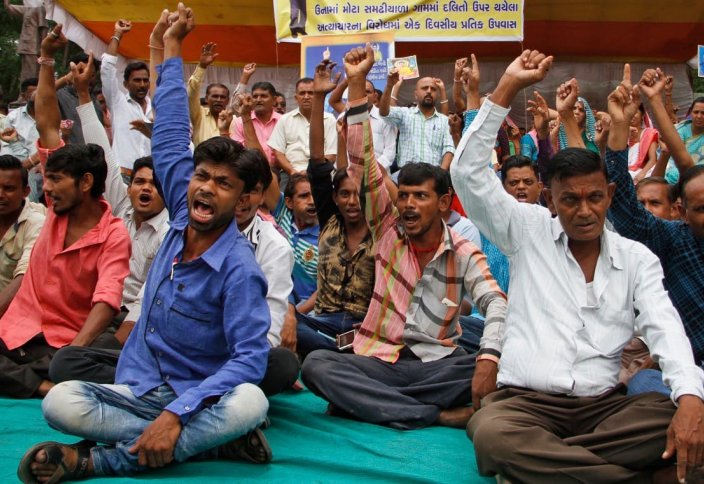
Ведущие технологические учебные заведения Индии известны своим качественным образованием и возможностями трудоустройства. Однако эти возможности часто ограничены теми, кто имеет более высокое социальное положение.

Когда Амит (имя изменено по просьбе) был принят в Индийский технологический институт в Дели, он был в восторге.
"Я был взволнован учебой в таком элитном институте и возможностями, которые это мне даст", - сказал он DW.
Благодаря сложным вступительным экзаменам и выгодным высокооплачиваемым предложениям о работе для выпускников, Индийские технологические институты (IIT) являются одними из самых престижных учебных заведений Индии.
ИИТ представляет собой сеть из 23 университетов, известных своим превосходством в исследованиях, науке и технологиях. Уровень их приема печально известен своей конкуренцией и колеблется от 0,5% до 2,5% по всей сети институтов.
«К чему я не был готов, так это к укоренившемуся в кампусе кастовому подходу. В первый год я сильно похудела и постоянно чувствовала, что мне здесь не место. Я решил выстоять, но это было нелегко», — сказал Амит.
«Узнав, что я принадлежу к зарезервированной категории, мои одноклассники начали относиться ко мне по-другому», — добавил он, имея в виду политику позитивных действий, закрепленную в конституции Индии, для улучшения положения общин, которые исторически являются частью низших ступеней кастовой иерархии страны.
Каста определяет социальный статус человека во многих обществах Южной Азии, и те, кого считают принадлежащими к «низшим» кастам, сталкиваются с системной дискриминацией.
«У одноклассников из высших каст были свои собственные группы, и я чувствовал себя исключенным и изолированным. Люди мимоходом говорили о том, что есть более достойные кандидаты, и я получил допуск только благодаря своей касте».
Кастовая дискриминация в кампусе
Опыт Амита не уникален. Исследование, проведенное в 2019 году Институтом информационных технологий Дели (IIT Delhi) — самое последнее из доступных — показало, что 75% студентов из исторически неблагополучных кастовых групп сталкивались с дискриминацией из-за высказываний по кастовому признаку.
The same study found that about 59% of students from the "General Category" — which lumps together those from historically privileged castes — either agreed with or were indifferent to these caste-based remarks.
Government-funded institutions in India reserve a percentage of seats for historically disadvantaged groups as part of their affirmative action efforts. However, many upper-caste and general-category students and faculty say that this undermines meritocracy.
"IITs are high-value institutions where traditional upper caste, middle class people want to go. They want these places to be their monopolies, and they were until some time ago, when reservations were not really implemented," Surinder Singh Jodhka, professor of sociology at the Jawaharlal Nehru University, told DW.
He added that students from underprivileged groups "are seen [as] being entitled on the basis of reservations, whereas students from the general category see it as an achievement because of their merit."
"This binary is constructed in a strange way, but it has come to be institutionalized. It has been taken for granted, and it goes all the way from admission to job recruitment," Jodhka said.
С какой дискриминацией сталкиваются студенты?
A student from IIT Bombay, who also did not wish to be named, told DW that caste status can often be seen in students' surnames. Many Indian surnames are associated with caste background and identity.
"There is a sort of segregation among students on caste lines. Even if some upper caste classmates are friendlier toward you, they still make casual casteist remarks, call us 'reservation kids' or share posts against reservations on social media," the student told DW.
"Lately, IIT campuses have started having chain restaurants and coffee shops inside the campus. These places are unaffordable to a lot of us from reserved categories, and further creates an atmosphere of segregation," he added.
The case of Darshan Solanki, an 18-year-old first-year student who died by suicide* in 2023, is still fresh in the minds of many of the students.
His family and friends reported him facing caste discrimination on campus in the days leading up to his death. However, a report by the university found "no specific evidence" of caste-based discrimination.
"There is often the narrative that these students took their own lives due to academic pressures or other problems. They never want to look into our experiences that make it so hard to focus on academics," Amit said.
Narayana Sukumar, a professor of political science at Delhi University, told DW that "whenever there is a suicide on campus, the administration will try to pacify the parents and say they will take care of everything."
"They will not allow any kind of protests within the campus. Even if you try to organize any such agitations, the administration tries to penalize the students. There is a complete silencing of voices," said Sukumar, who has published a book studying caste discrimination and exclusion in Indian universities.
Как университеты отреагировали на кастовую дискриминацию?
In recent years, several IITs have set up so-called Scheduled Caste/Scheduled Tribe (SC/ST) cells to tackle caste discrimination. These bodies are supposed to address student complaints and ensure reservation policies are properly implemented in admissions and hiring.
Some institutes, like IIT Bombay, have gone further, introducing caste awareness courses and conducting surveys to understand discrimination on campus.
India's Ministry of Education directed government-funded universities, including IITs, to fill all reserved faculty positions by September 2022.
However, data from a right to information document obtained by the Ambedkar Periyar Phule Study Circle (APPSC), a student advocacy group fromed at IIT Bombay, showed that 14 departments at IIT Delhi and eight at IIT Bombay had no faculty members from reserved categories as of 2023.
In response to this, IIT Bombay's director Shireesh Kedare released a statement saying the institute was making efforts to hire top-quality candidates, and often candidates applied from the general category instead of reserved.
"Yes, having a diverse faculty will really help. However, the change must happen at the top, as well. More IIT directors need to be aware and proactive about caste issues. The SC/ST cell should ideally work for the students, but it works for the university," said Sukumar.
*Editor's note: If you are suffering from serious emotional strain or suicidal thoughts, do not hesitate to seek professional help. You can find information on where to find such help, no matter where you live in the world, at www.befrienders.org.
Редактор: Уэсли Ран
Author: Tanika Godbole (in New Delhi)