



|
Сирия/Ирак: Что будет означать конец РПК для курдов на Ближнем Востоке?
|
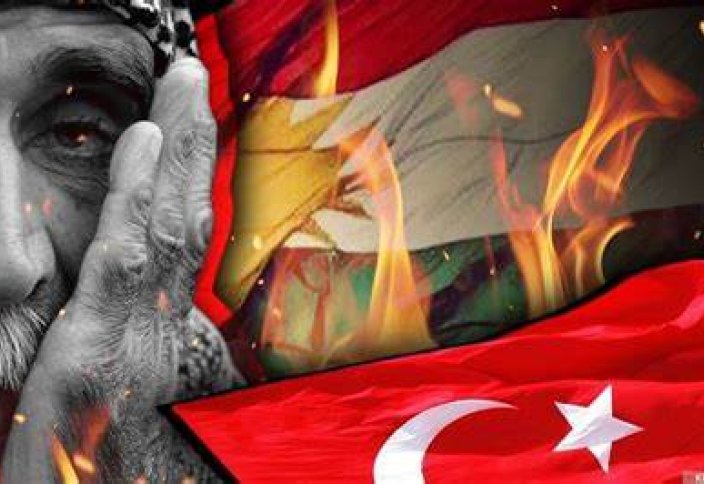
После призыва Абдуллы Оджалана распустить Рабочую партию Курдистана (РПК) и сложить оружие, сирийские филиалы и штаб-квартира РПК в Ираке остаются неоднозначными. Какие у них есть варианты?
Курды на Ближнем Востоке находятся в состоянии неопределенности с тех пор, как Абдулла Оджалан, заключенный в тюрьму лидер Рабочей партии Курдистана (РПК), выступил со своей новаторской речью в конце февраля.
В своем историческом обращении он сказал: «Соберите свой съезд и примите решение. Все группировки должны сложить оружие, а РПК должна самораспуститься».

Хотя официальная дата такого заседания Конгресса еще не объявлена, РПК уже заявила 1 марта, что будет подчиняться. Они также объявили об одностороннем прекращении огня.
Это может означать начало конца РПК и ее 40-летней ожесточенной борьбы за независимость на турецкой территории.
Однако до тех пор, пока такой конец РПК не будет подтвержден, Анкара будет продолжать считать террористической организацией не только турецкую РПК, но и штаб-квартиру РПК в Ираке и филиалы в Сирии.
Turkey expects all groups to dissolve, without exception.
In his speech, however, Ocalan did not specifically mention any of the Kurdish forces and administrations outside Turkey, although he did refer to ‘all groups,’ which could be interpreted as referring to Syrian affiliates also.
He also failed to offer an alternative roadmap for the around 35 million Kurds who remain the largest ethnic group without their own state.
The Kurds live in a vast territory, which is split across Turkey, Syria, Iraq, Iran, and Armenia. While they share a common ethnic identity and are predominantly Sunni Muslims, they do not have cross-border representatives, common policies or a joint military defense unit.
PKK spokespeople in Iraq and Syria had different reactions to Ocalan's call.

Курды в Ираке
Analysts widely agree that the PKK headquarters in northern Iraq will most likely follow Ocalan's call.
"Once the PKK's congress formally declares it's dissolution and renounces armed struggle, this decision would cover both southeast Anatolia in Turkey [where the Kurdish majority in Turkey live] and militants directly operating under the PKK leadership structure in north Iraq," Nigar Goksel, Turkey and Cyprus project director at the conflict-prevention organization International Crisis Group, told DW.
The president of the semi-autonomous Iraqi Kurdistan region in Iraq's north, Nechirvan Barzani, has already urged the PKK to "commit to and implement this [Ocalan's] message."
Hopes are that an end of the armed fight between Turkey and the PKK in Iraq will not only end ongoing strikes by the Turkish military in the area, but eventually improve political and economic ties between Iraqi Kurdistan and Turkey.
Furthermore, the PKK's dissolution would most likely also improve the political situation in Syria's northeast where Turkey and Kurdish forces have been fighting for years.
"If these groups [in Turkey and Iraq] fully disband and undergo a DDR process [disarmament, demobilization and reintegration], this will unlock unprecedented opportunities for good governance and stability in northern Syria as well as alter the balance of power across the country," Burcu Ozcelik, senior research fellow for Middle East Security at the London-based think tank Royal United Services Institute (RUSI), told DW.
Курды в Сирии
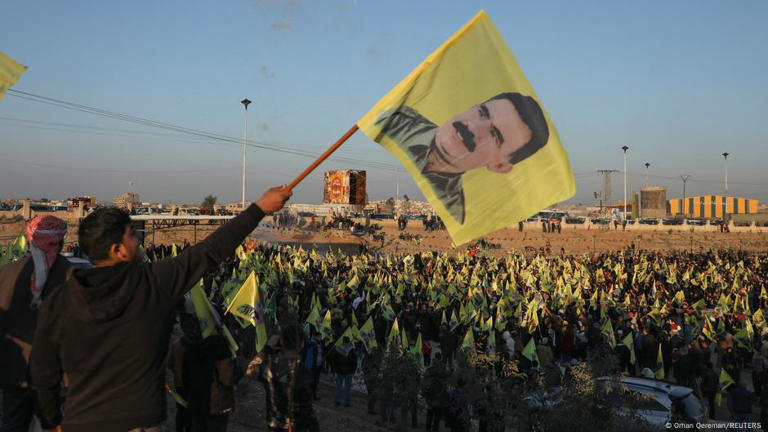
Yet, both analysts highlight that the Kurdish forces in Syria don't see Ocalan's call as ultimately binding for themselves.
Kurdish forces consist of the Kurdish Syrian People's Protection Unit (YPG), who are at the core of the Kurdish-led Syrian Democratic Forces, or SDF.
According to Ozcelik, the YPG is organically and institutionally linked to the PKK, and it is unimaginable that Turkey would agree to the YPG’s survival as it currently stands.
However, Mazloum Abdi, the commander of the SDF, already said that the call to dissolve did not apply to his group.
"It is not related to us in Syria," he stated.
He still welcomed Ocalan's call.
"If there is peace in Turkey, that means there is no excuse to keep attacking us here in Syria," Abdi said.
"If the PKK genuinely and demonstrably lays down arms and disbands, meaning that the armed cadres physically hand over their weapons to state authorities as the process would demand, it will be the dawn of a new era," Ozcelik stated.
She also said, however, that this "will not mean that PKK-affiliates operating in northeastern Syria will now have free rein."
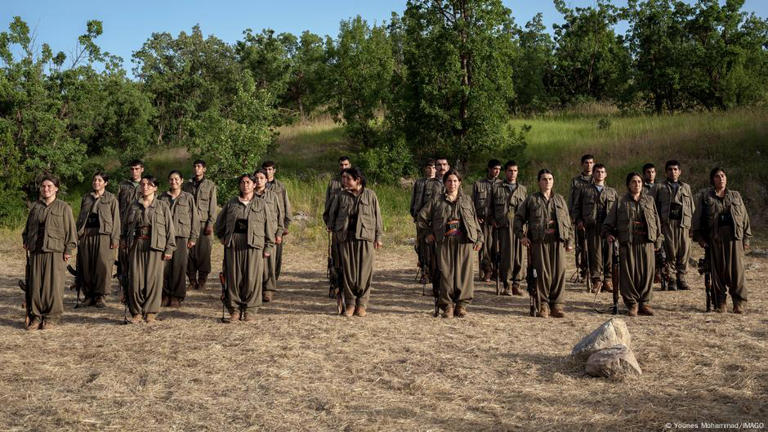
Является ли конец РПК путем к единству?
Ocalan's call for an end of the PKK coincides with an unprecedented situation in Damascus that arose after the fall of Syria's longtime dictator Bashar Assad in December.
Syria's new interim government under President Ahmed al-Sharaa has called on the Kurdish forces to integrate into the national army.
However, the Kurdish forces insist to operate as an individual unit within the army.
So far, the Syrian government has rejected this and also didn't invite the SDF to the country's first national dialogue conference in late February.
While it remains to be seen if, or to what extend the SDF might integrate, the focus of the Kurdish forces is "not on disarmament," Nigar Goksel told DW.
And yet, once the PKK dissolves, the links between the Kurdish forces in Syria and the PKK would effectively be severed, she added.
In turn, Burcu Ozcelik sees that Ocalan's call for an end of the PKK could actually help the Kurds in Syria to gain a political foothold.
"If the Syrian Democratic Forces is able to credibly distance itself from the PKK and its affiliates, and contest in the political space of the new Syria as a pro-democracy party through legal guarantees, it will open the path for political mobilization," Ozcelik said.
Ареф Габо из DW оказал содействие в подготовке этой статьи.
Редактор: Карла Блейкер
Author: Jennifer Holleis