



|
Стражи мёртвых: суровые реалии работников кладбища Лагоса
|
Среди тишины надгробий забытая группа рабочих тихо движется среди мёртвых, выполняя обязанности, о которых мало кто осмеливается себе представить. Эти хранители городских мест упокоения трудятся в суровых условиях, их непоколебимая преданность обеспечивает уход за могилами, почитание погребальных обрядов, а сообщества находят утешение среди неизбежных потерь жизни. ИБРАГИМ АДАМ рассказывает о повседневных трудностях этих людей, которые несут бремя общественного стигматизации, связанного с их работой, и часто полагаются на пожертвования, а не на зарплату
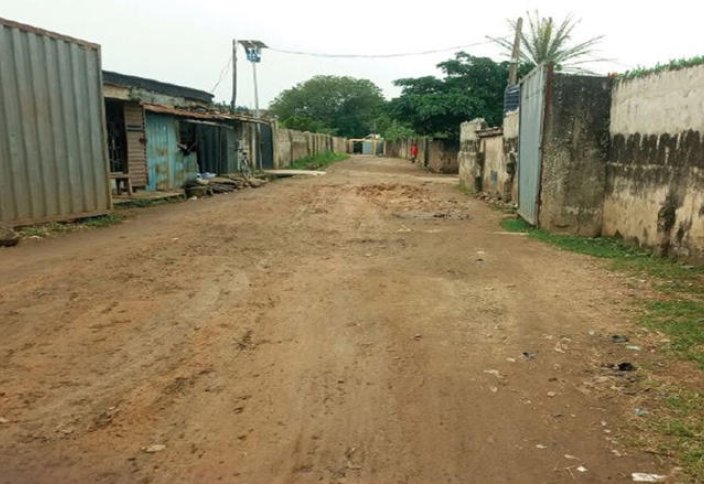
Лёгкий, ровный ветерок скользит по улице Джинаду в районе местного самоуправления Агеге штата Лагос, хоть и немного, смягчая тяжесть горя, висящую в воздухе.
Расположенное в оживлённом районе, кладбище хауса тихо расположено среди жилых зданий, разделяя границы с ритмами повседневной жизни. Тем не менее, несмотря на окружение, кладбище объявляет о себе задолго до того, как кто-то достигает своих ворот.
С самого начала прямой дороги, ведущей внутрь, скорбящие уже могут определить место упокоения, их шаги сопровождаются смесью ожидания, благоговения и печали.
За два месяца повторных визитов Saturday PUNCH наблюдал, как это скромное кладбище одновременно впитывает и отражает необузданные человеческие эмоции, сопровождающие последний путь жизни. Это место, где тишина громко говорит, и где каждый прибывший несёт свою историю утраты.
Доступ к кладбищу становится особенно сложным в сезон дождей. Когда идёт дождь, машины скорой помощи и другие транспортные средства, перевозящие трупы, часто с трудом ориентируются на неасфальтированной, песчаной дороге, иногда застревая до входа.
Наш корреспондент также посетил другие кладбища в штатах Лагос, Огун и Ойо в поисках аналогичных сведений, но работники этих точек отказались выступать. Некоторые доходили до того, что просили его уйти, обвиняя журналистов в том, что они сосредоточены только на негативных нарративах.
«Вы пишете о нас только плохое. Ждёшь, чтобы узнать, что кого-то поймали с человеческими частями тела», — сказал один из работников.
Attempts to reassure and explain the purpose of the visit proved unsuccessful, as a few workers became hostile and attempted to intimidate him, forcing his departure.
Прибытие в город мёртвых
By 7 am each day, Abdulhameed Mohammed is already at the cemetery, beginning work in a place where silence, prayer and duty converge long before the gates officially open at 8 am.
Before the first mourners arrive, Mohammed has surveyed the grounds, prepared his tools and mentally braced himself for a day that may involve digging graves under the blazing sun or heavy rain, washing stiff bodies and offering comfort without words.
At 61, he has spent more than two decades tending to the dead in Agege Local Government Area, performing tasks many would rather not imagine, let alone endure daily.
Although the cemetery officially closes at 6 pm, his work is rarely defined by the clock.
As chairman of the cemetery workers, he not only supervises burials but also actively participates in washing, dressing and interring bodies before covering the graves with earth.
Mohammed explained that cartons, planks of wood and bamboo sticks are often used to prepare graves, improvised materials that speak to both scarcity and resilience.
With a faint smile, he told Saturday PUNCH, “I have been working here for more than 20 years. We don’t receive any salary for this work, no monthly pay, no weekly pay, not even payment per corpse.”
Благотворительность, вера и риски
What sustains Mohammed and his colleagues, he said, is neither wages nor contracts, but charity and faith.
After each burial, a box, known as Fisabilillah (for the sake of Allah) is placed nearby, giving mourners the opportunity to donate whatever they can afford.
“What we receive is only assistance from people who come here. Sometimes the leaders of the Agege community also help us. If they have anything to give, they drop it there. It can be any amount. This is how we survive. There is no fixed income at all,” he said.
Originally from the Danlaji community in Bindawa Local Government Area of Katsina State, Mohammed now lives in Agege, close enough to walk to the cemetery each morning.
Despite the nature of his work, he said they don’t sleep within the cemetery grounds.
“I live in Agege, not far from here, and we don’t sleep in the cemetery. After work, we go back home,” he said.
Security, according to Mohammed, is largely left to faith. There are no guards stationed at the cemetery at night, only security lights fixed around the graveyard.
“We don’t have security personnel guarding this place. What we have are lights all over the cemetery, and beyond that, we leave everything to Allah. We have never had incidents of people jumping the fence or trying to do bad things here. This graveyard is secure at all times,” he said.
The work itself, however, carries physical risks. Mohammed explained that digging graves and handling tools expose workers to frequent injuries.
“We work with cutlasses, and accidents can happen. Sometimes we step on nails, broken bottles or sharp sticks that injure our legs. These are injuries that can happen at any time while working,” he said.
Принятие в семье
At home, Mohammed said his family has come to accept the dangers and uncertainties of his work, guided more by shared belief than financial expectation.
“My family has no problem with this job. They believe in Allah and understand that I am doing this work for His sake, not because of money. This work is voluntary,” he said.
That belief, he added, sustains his household, as whatever is given at the cemetery often becomes their means of survival.
“The way I support my family is through what people give us here. Sometimes it is small, sometimes it is reasonable. That is what we use to take care of our families,” Mohammed said.
Стигма, связанная с COVID-19
Mohammed recalled the stigma he endured, particularly during the COVID-19 pandemic, when fear transformed cemetery workers into social outcasts.
He said the period not only altered how people related with him in public spaces but also strained his social and religious connections, making an already demanding job even more isolating.
Yet, sustained by faith and the solidarity of his colleagues, he persevered and continued his duties despite the widespread rejection.
“People were afraid to come close to us, shake our hands or even talk to us. They would greet us from a distance. Some even told us not to worship with them in the same mosques. It was a really terrible time for us,” he said.
Mohammed explained that although conditions have improved since then, access to protective equipment remains limited because the workers depend largely on donations rather than structured institutional support.
“We now have boots and gloves. We also have proper masks, tissues and air fresheners. Some people volunteer and bring these safety items to us without us asking,” he said.
“Sometimes, people even bring shrouds because there are families who cannot afford them. There are cases where accident victims are brought here, and after all the necessary documentation, we still provide the shroud for them.”
Эмоциональная нагрузка
Mohammed admitted that the job was initially overwhelming, as fear and uncertainty defined his early days among the dead. But over time, however, faith and experience replaced anxiety with calm acceptance.
“At the beginning, when I got this job, there was fear. This is not the kind of work people choose willingly. But after more than 20 years, there is no fear anymore, no bad dreams and no psychological disturbance,” he said.
He revealed that some of the scenes he has witnessed remain deeply unsettling, from mangled accident victims to bodies brought in under urgent and distressing circumstances.
“We have received corpses without heads, some without legs, because of the severity of the accidents, and others covered in blood. I remember a young man who had a terrible accident.
“We kept his remains until morning, washed him, dressed him and buried him. What about those who die on the railway tracks, where all you find is half of a body?” he said.
Реестр захоронений
Findings showed that the cemetery maintains a burial register to ensure accountability and prevent indiscriminate burials.
“The register captures the deceased person’s full name, the family representative, the date of burial and signatures. Without these details, burial is not allowed,” Mohammed said.
He added that the records become particularly important when families return with sensitive or difficult requests.
“There are cases where relatives come back later asking for exhumation. You can imagine how stressful and tedious that is, especially when the body has been buried for more than six months,” he said.
For Mohammed, his work is neither a protest nor an appeal. His message to government and society is simple.
“We cannot go to politicians or leaders to beg for help. If anyone feels led to support the cemetery or the workers here, they can come willingly and help,” he said.
As evening approaches and the cemetery prepares to close, Mohammed cleans his tools, bathes and walks home to his family, just like his colleagues.
Сорок лет работы на кладбище
For more than four decades, Babangida Halidu has also walked a path few are willing to tread.
At 83, he reflects on a lifetime of service at the cemetery, where he has helped lay countless souls to rest. Each grave he has dug tells a story of endurance and quiet devotion to his duty.
Speaking calmly, Halidu told Saturday PUNCH that he is content with his work and harbours no fears.
“I have spent about 40 years doing this job. It has never caused problems for my family or brought trouble into our home. I live peacefully, and I am satisfied because this work feeds my family,” he said.
Halidu, who hails from Jalawa Community in Warawa Local Government Area of Kano State, recalled how he initially combined cemetery work with a job at the Murtala Muhammed Airport, dedicating weekends to burial duties.
“When I retired from my main job, I returned here full-time,” he said.
For him, serving the dead has become a vocation anchored in faith, duty and the quiet fulfilment of sustaining both family and community.
Столкновение с ранними страхами
Despite the physical and emotional demands of grave digging and burial rites, Halidu insisted the job has not affected him negatively.
“When I started, I was afraid. But now, nothing scares me anymore. After spending so many years here, there is nothing new for my eyes to see,” he said.
“Emotionally and psychologically, this work has not disturbed me. I don’t have bad dreams or troubling thoughts. I don’t dream about the graveyard. Physically and mentally, I am fine.”
«Мне не некомфортно нести трупы»
At 67, Jubril Adamu, the cemetery ambulance driver, rises each morning to a task many would avoid.
He describes it as a calling, one that constantly confronts mortality but offers him a sense of purpose.
Adamu, from Zango Community in Garun Malam Local Government Area of Kano State, has spent over four years behind the wheel, navigating narrow roads and solemn journeys.
“I have been driving the ambulance for over four years, and all I can say is Alhamdulillah. I have no regrets,” he told Saturday PUNCH.
When he accepted the job, he was promised a monthly salary of N20,000, which he considered fair. However, payments became irregular.
“I was paid N10,000 every two weeks, and then it stopped. Our chairman now supports me with N10,000 monthly,” he said.
Even when the ambulance is idle, Adamu remains active, assisting with other tasks at the cemetery.
“My family is not bothered by my job. At least I am working, even if the pay is irregular. Many people are struggling, some are sick, some are in prison. I am here, working for my community,” he said.
According to him, community members often acknowledge his dedication with a mix of respect and humour.
“When people see me going out to carry a corpse, they tell me ‘well done’. Some laugh and say, ‘You again, my friend.’ It is all by the grace of Allah,” he said.
Despite the gravity of his duties, Adamu remains pragmatic.
“I have never felt uneasy carrying a corpse. One day, we will all be like them. Sometimes the smell, especially when a body has stayed for two or three days, is very strong, and I cover my nose with a mask. That moment is not pleasant.
“But emotionally and psychologically, I just do my job. When you are dead, you are dead. We don’t believe a corpse can disturb anyone. I carry the body and bring it here for burial,” he said.
On days when he feels under the weather, Adamu emphasised that his health struggles are his own, and the deceased are never the cause.
“When I am not feeling well, it is not the dead who are making me sick. They are two different things. I get sick because of my health, not because of the dead. It is only Almighty Allah who is helping us, not humans,” he said.
Эмоциональное напряжение
A Lead Consultant at 4largeminds Consulting, Mojisola Ogunkoya, told Saturday PUNCH that cemetery workers face profound emotional and physical challenges, compounded by societal stigma.
The expert warned that a holistic approach is needed to support their well-being.
“Psychological well-being is deeply personal. While it’s crucial to acknowledge the challenges cemetery workers face, including grave diggers and funeral home staff, it’s equally important to recognise that individuals’ experiences vary as they navigate these challenges differently,” she said.
Ogunkoya, also a Grief Support Specialist and Emotional Intelligence Certified Coach, added that many cemetery workers find fulfilment and purpose in their roles, demonstrating remarkable passion and dedication.
“Many workers in this field find fulfilment and purpose in their roles, showing exceptional commitment to their work,” she said.
She acknowledged the significant difficulties inherent in the profession:
“Cemetery workers encounter unique challenges, including isolation, safety concerns, emotional strain, physical demands, and unpredictable schedules. The societal stigma surrounding their profession can also take a toll on mental health,” she explained.
According to Ogunkoya, addressing these challenges requires a comprehensive approach, including access to mental health resources, emotional support, and fostering a more understanding and respectful society.
“To better support these workers, we need a holistic approach: providing access to mental health resources, promoting emotional well-being, and fostering a more compassionate society,” she said.
She also emphasised the importance of fair compensation in recognising cemetery workers’ efforts, urging society and government authorities to value and empower them.
“Fair compensation and rewards are crucial as they acknowledge their hard work and serve as motivation. Society must strive to create an environment where cemetery workers feel valued, supported, and empowered. Doing so promotes their overall well-being and recognises the vital contributions they make to our communities,” she added.
Призывы сообщества за поддержкой
Residents of the area have called on the government and well-meaning Nigerians to provide support for cemetery workers who continue to labour despite their age.
Mohammed Abdulsalam, a resident who has lived in the community for over 30 years, described the cemetery workers’ service as “service to humanity.”
“We have known them for a very long time and lived closely with them. We respect them deeply and see them as family. They are all like fathers to us,” he said.
Abdulsalam expressed concern over the harsh conditions under which the cemetery workers operate.
“Whenever we see them working, we pity them. I often tell myself that if I have something, I will come and assist them. This work is how they survive and feed their families, and that is why we feel compassion whenever we see them,” he explained.
He stressed the need for intervention to support these workers.
“The government should step in, especially with feeding and healthcare support. We believe they can assist and make life easier for the cemetery workers,” Abdulsalam said, emphasising that the workers are an integral part of the community.
Another long-time resident, Adeniji Kazeem, praised the dedication of the cemetery workers in maintaining the burial grounds.
“The cemetery workers perform their duties with patience and care. They ensure the grounds are clean and well-kept, which shows their commitment to serving the community,” he said.
Kazeem highlighted the physical demands and attention to detail required in their work:
“Their work is not easy, but they carry it out diligently every day. We respect them greatly for the effort they put in. It is only right that they receive the support they deserve because what they do is not something anyone can simply wake up and do. Knowing the cemetery is well-maintained gives us peace of mind and shows they care not just about their job, but about the community as a whole. We have never heard of any bad incidents here, which speaks to the integrity of all the workers,” he said.
He expressed concern that despite their hard work, cemetery workers often receive little recognition or assistance:
“These individuals continue to labour at an age when most would retire. Their dedication deserves acknowledgement and support from both the community and government,” Kazeem said.
He called on authorities to ensure the workers have access to healthcare and support for daily needs.
“The government should provide assistance. Their tireless service should not go unnoticed, and it is our collective responsibility to make their lives easier,” he added.