




|
В Китае кипит инакомыслие, несмотря на то, что Си Цзиньпин выставляет напоказ военную мощь
|
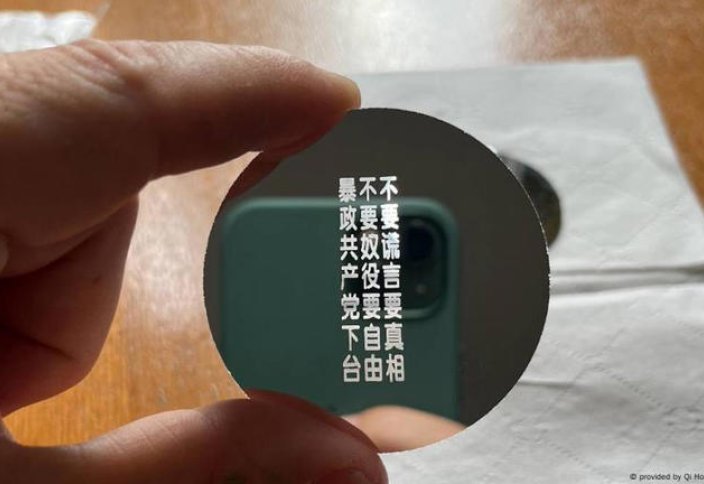
В то время как Пекин продемонстрировал военную мощь Китая, смелый акт инакомыслия в Чунцине осветил ночь, обнажив глубокие разногласия, стоящие за патриотическими проявлениями Китая.
После того, как в среду Китай провел масштабный военный парад в Пекине, на котором войска маршировали в плотном строю и демонстрировались самые современные ракеты, один акт неповиновения примерно в 1450 километрах от Китая начал привлекать внимание всего мира.
29 августа, всего за несколько дней до большого парада, слайд-шоу с гигантскими антикоммунистическими лозунгами осветило ночь, проецируемое на внешнюю стену высотного здания в городе Чунцин на юго-западе Китая.
«Долой красных фашистов! Свергните коммунистическую тиранию!» — гласил один лозунг, а другой гласил: «Вставайте, вы, кто отказывается быть рабами!»
К тому времени, когда полиция ворвалась в комнату, где находился проектор, Ци Хун, активист тщательно спланированной акции, уже давно сбежал, оставив только написанное от руки письмо, призывающее людей «не помогать тирану».
"Меня особенно возмутило использование правительством государственного аппарата для разжигания ненависти", - сказал Ци DW после прибытия в Лондон с женой и дочерьми, сославшись на парад как на последнюю каплю, которая побудила его устроить проекцию.
Такие акты инакомыслия редки в Китае, где публичная критика Коммунистической партии может привести к полицейскому преследованию, преследованию или тюремному заключению.
На Weibo, одной из крупнейших социальных сетей страны, нет никакой информации о протесте Ци. В течение нескольких дней в топе поисковых запросов доминировали посты, восхваляющие парад, за которыми последовали новости об аресте мужчины 4 сентября за критические комментарии в Интернете о событии.
Общественный энтузиазм и замалчиваемый скептицизм
Парад в среду, приуроченный к 80-й годовщине окончания Второй мировой войны, привлек значительное внимание всего мира благодаря исторической встрече между президентом Китая Си Цзиньпином, президентом России Владимиром Путиным и лидером Северной Кореи Ким Чен Ыном.
A flood of analyst and media assessments have focused on Beijing's display of modernized weaponry and technological progress.
China's state-run English-language newspaper, China Daily, reported that the parade "received high praise from world leaders," with its live broadcast keeping Chinese people "riveted to their mobile phones and television sets."

Wu Qiang, an independent academic and political commentator in China, described the overall atmosphere to DW as "a mix of attention, excitement, and frustration at voices that challenged [the parade]."
In other words, Wu added, public attitudes toward the military parade were "highly divided."
"While many were genuinely excited, some stayed silent, and others voiced skepticism," he said, adding that the phenomenon was evident on WeChat, China's dominant and leading messaging app.
According to Chinese media reports, a man in his 40s was placed in police custody on Thursday after criticizing the live broadcast of China's military parade on WeChat and insulting users expressing patriotic views.
In the run-up to the parade in Beijing, Chinese authorities shut down parts of the capital with strict security measures. Local shops and subway stations near the parade route were not allowed to open, and residents needed to keep their windows closed.
Wu told DW that during the parade, the empty streets under tight control and "carefully choreographed cheering crowds" gathering in Tiananmen Square also spoke volumes about the contrast in public sentiment.
Редкий, смелый акт инакомыслия во время парада
Qi, the activist staging the projection protest, rejects what he called "hate propaganda."
In his view, the Chinese Communist Party (CCP) constantly emphasizes atrocities committed during World War II by the Japanese empire's military regime — which killed millions of people across the Asia-Pacific — yet fails to reflect on the tragedies it caused at home, including the 1989 Tiananmen Square massacre.

In July, weeks before the August 31 military parade, Qi started planning his protest. He surveyed locations and practiced laser projection with harmless phrases. He then left China and switched on the projector remotely.
Qi said he drew his inspiration from previous activism, including the 2022 Sitong Bridge incident in Beijing's Haidian district, during which a banner was unfurled brandishing the words "We need food, not COVID tests. We want freedom, not lockdowns," in reference to China's strict zero-COVID policy.
"We want dignity, not lies. We need reform, no cultural revolution," the white banner continued in red letters. "We want to vote, not a leader. Don't be slaves, be citizens." Censors quickly removed references to the protest on social media.
In 2023, before a series of political meetings began, a lone protester named Chai Song also projected defiant slogans on a building in Shandong Province.
«Я просто не мог больше этого терпеть»: китайский активист
Such planned actions have become more common in China, as dissidents are looking for ways to express their disapproval of the government while avoiding the country's sweeping surveillance system.
Leading up to the event, several photos circulated on X among Chinese dissident communities, showing anti-communist slogans such as 'Step down, dictator' handwritten on the doors of public toilets in Beijing.
DW, however, was not able to independently verify the authenticity of these photos.
Following Qi's public protest, the police detained one of his brothers and a friend and interrogated his elderly mother outside her home in China. The Chongqing police had not answered DW's request for comment at the time of publication.
On social media, many have hailed Qi as a "warrior." But when speaking with DW in London, he simply shook his head: "I'm just an ordinary person. I simply couldn't take it anymore — someone had to do something."
As a practicing Buddhist, Qi told DW: "I often talk to my children about karma… Sow the seeds of hatred, and you will reap the fruits of hatred."
"I don't want them to keep living in this kind of society," he said, "It's like you're living in a cesspit, yet you are forced to say, 'It smells good.'"
Корреспондент DW Хао Юй оказал содействие в подготовке материала
Редактор: Кит Уокер
Author: Yuchen Li (in Taipei)