




|
«В окружении океана песка»: опустынивание ставит древний город на грань забвения
|
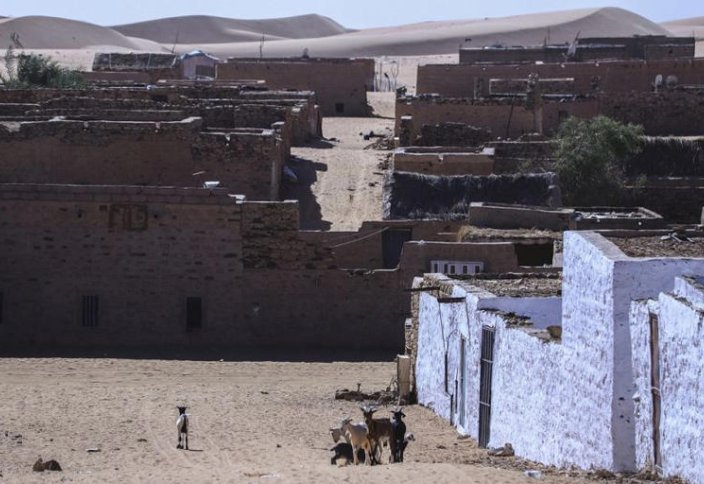
На протяжении веков поэты, ученые и теологи стекались в Чингетти, транссахарский торговый пост, где находится более десятка библиотек, содержащих тысячи рукописей.
Но сейчас она стоит на грани забвения. Зыбучие пески уже давно покрыли ядро древнего города 8-го века и вторгаются в районы на его нынешней окраине.
Жители говорят, что пустыня – это их судьба.
По мере того, как климат в мире становится все более жарким и сухим, песчаные бури все чаще обрушивают метры дюн на улицы Чингетти и в дома людей, полностью затопляя некоторые из них.
Проекты по посадке деревьев пытаются сдержать вторжение песков, но до сих пор они не ослабляли глубоко укоренившиеся опасения по поводу будущего.
Как стихийное бедствие в замедленной съемке
Чингетти является одним из четырех объектов Всемирного наследия ЮНЕСКО в Мавритании, западноафриканской стране, где только 0,5 процента земли считаются пригодными для сельского хозяйства.
In Africa - the continent that contributes the least to fossil fuel emissions - only Somalia and Eswatini have experienced more climate change impacts, according to World Bank data.
Mauritanians believe Chinguetti is among Islam’s holiest cities. Its dry stone and mud mortar homes, mosques and libraries store some of West Africa’s oldest Quranic texts and manuscripts, covering topics ranging from law to mathematics.
Community leader Melainine Med El Wely feels agonised over the stakes for residents and the history contained within Chinguetti's walls. It's like watching a natural disaster in slow motion, he said.
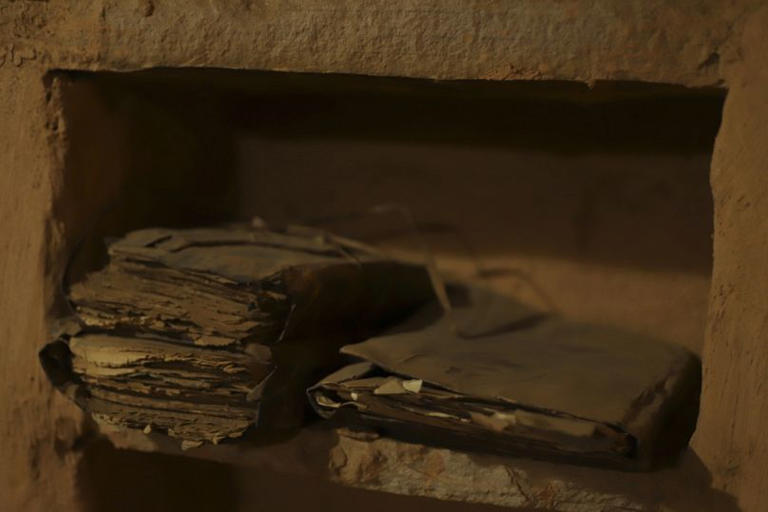
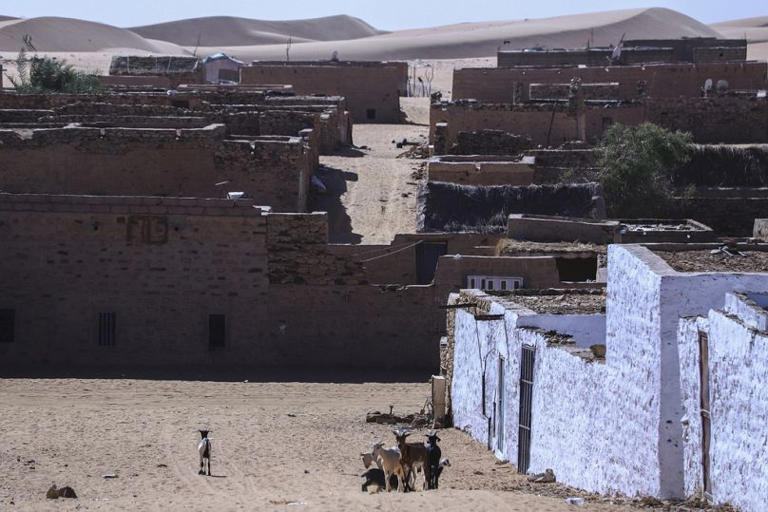
“It’s a city surrounded by an ocean of sand that’s advancing every minute,” El Wely, the president of the local Association for Participatory Oasis Management, said.
“There are places that I walk now that I remember being the roofs of houses when I was a kid.”
He remembers that once, when enough sand blew into his neighbourhood to cover the palms used to make roofs, an unknowing camel walking through the neighbourhood plunged into what was once someone’s living room.
Пустыни расширяются с беспрецедентной скоростью
Research suggests sand migration plays a significant role in desertification. Deserts, including the Sahara, are expanding at unprecedented rates and “sand seas” are being reactivated, with blowing dunes and transforming landscapes where vegetation once stood.
“What we used to think of as the worst case scenario five to 10 years ago is now actually looking like a more likely scenario than we had in mind,” said Andreas Baas, an earth scientist from King’s College London who researches how winds and the way they blow the sand are changing.
More than three-quarters of the Earth’s land has become drier in recent decades, according to a 2024 United Nations report on desertification. The aridity has imperilled the ability of plants, humans and animals to survive. It robs lands of the moisture needed to sustain life, kills crops and can cause sandstorms and wildfires.
“Human-caused climate change is the culprit; known for making the planet warmer, it is also making more and more land drier,” the UN report said. “Aridity-related water scarcity is causing illness and death and spurring large-scale forced migration around the world.”
Scientists and policymakers are mostly concerned about soils degrading in once-fertile regions which are gradually becoming wastelands, rather than areas deep in the Sahara Desert.
Дома теперь погружены в песок
In Chinguetti, a changing climate is ushering in many of the consequences that officials have warned about. Trees are withering, wells are running dry and livelihoods are vanishing.
Date farmers like 50-year-old Salima Ould Salem have found it increasingly difficult to nourish their palm trees, and now have to pipe in water from tanks and prune more thoroughly to make sure it's used efficiently.
Salem's neighbourhood used to be full of families, but they’ve gradually moved away. Sand now blocks the doorway to his home. It's also buried those where some of his neighbours once lived. And a nearby guesthouse built by a Belgian investor decades ago is now half-submerged in a rippling copper-hued dune.
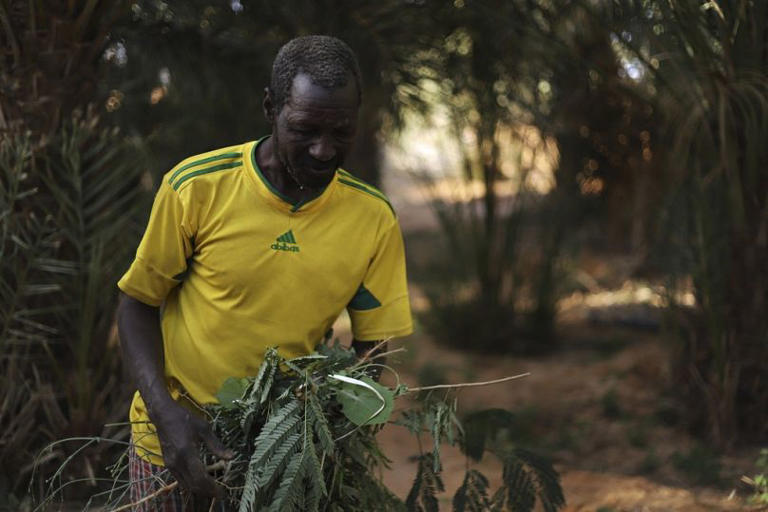
Though many have departed, Salem remains, aware that each time a member of the community leaves, their home can no longer serve as a bulwark. The rest of the community therefore becomes more likely to be swallowed by the desert.
“We prefer to stay here. If I leave, my place will disappear,” the 50-year-old date farmer said.
Деревья, которые когда-то защищали окрестности, исчезли
Acacia, gum and palm trees once shielded the neighbourhood from encroaching dunes, but they’ve gradually disappeared. The trees have either died of thirst or have been cut down by residents needing firewood or foliage for their herds to feed on.
Sandstorms are not new but have become increasingly intrusive, each leaving mountains of sand in the neighbourhoods on the edge of the city, retired teacher Mohamed Lemine Bahane said. Residents use mules and carts to remove the sand because the old city's streets are too narrow to accommodate cars or bulldozers.
When sand piles high enough, some build new walls atop existing structures.
“When you remove the vegetation, it gives the dunes a chance to become more active, because it’s ultimately the vegetation that can hold down the sand so it doesn’t blow too much,” Bahane said.

For years, Bahane has taken measurements of the sand deposits and rains and says that Chinguetti has received an annual average of 2.5 centimetres of rainfall over the past decade.
As rainfall plummets, trees die, and more sand migrates into town. And with shorter acacia trees submerged in sand, some herders resort to cutting down date palm trees to feed their flocks, further disrupting the ecosystem and date farming economy.
The sands also raise public health concerns for the community breathing in the dust, Bahane said.
Может ли посадка большего количества деревьев остановить песок от погребения Чингетти?
The solution, Bahane believes, has to be planting more trees both in neighbourhoods and along the perimeter of town.
Such “green belts” have been proposed on a continent-wide scale as Africa's “Great Green Wall” as well as locally, in towns like Chinguetti.
Mauritania's Ministry of Environment and Ministry of Agriculture as well as European-funded NGOs have floated projects to plant trees to insulate the city's libraries and manuscripts from the incoming desert.
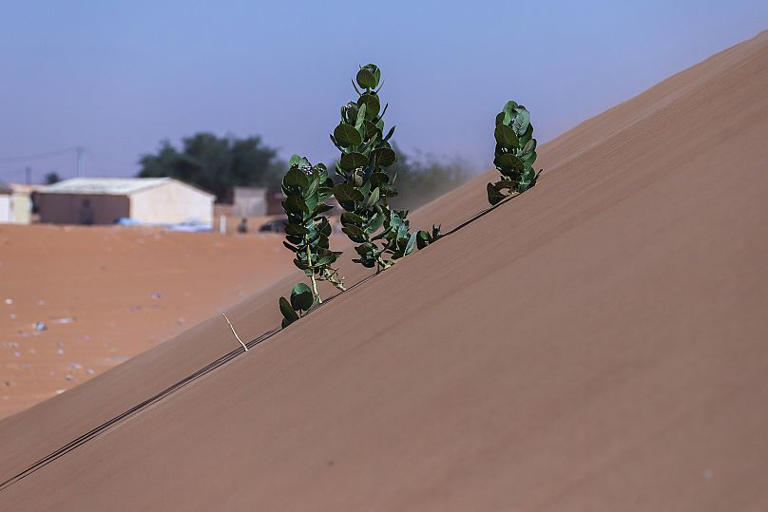
Though some have been replanted, there's little sign that it has contributed to stopping the desert in its tracks. It can take years for taproots to grow deep enough into the earth to access groundwater.
“We're convinced that desertification is our destiny. But thankfully, there are still people convinced that it can be resisted,” El Wely, the community leader, said.
Africanews English