


|
Валютный кризис в Букаву: жители борются с поврежденными банкнотами
|
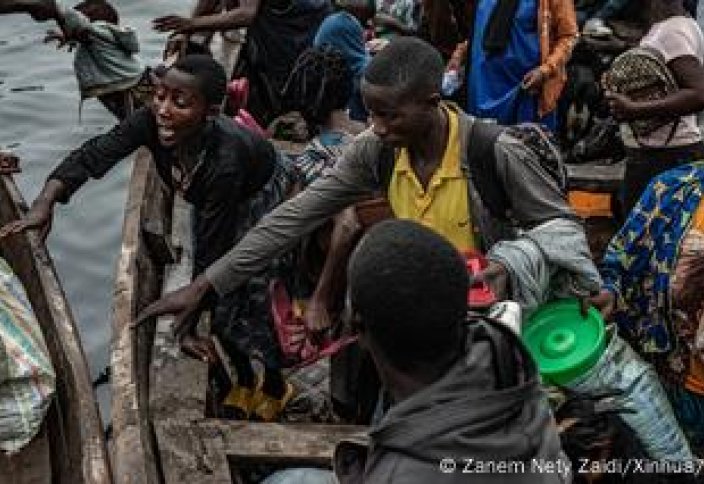
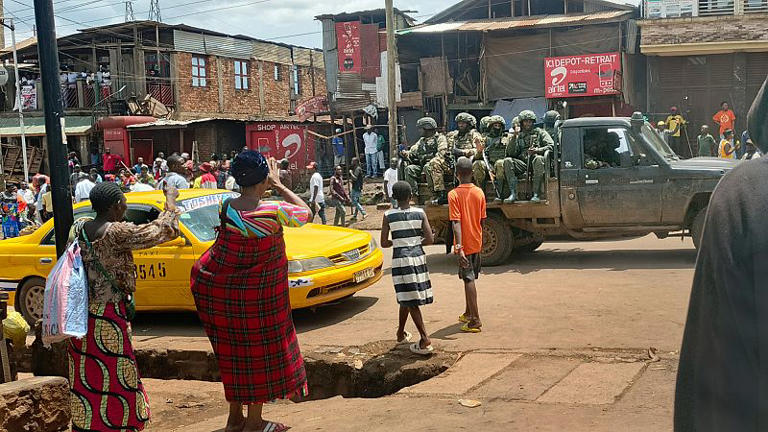
В контролируемом повстанцами городе Букаву на востоке Конго Ален Мукумиро спорит с владельцем магазина в маленькой деревянной хижине, который отказывается принимать его деньги.
«У всех моих денег есть серийные номера, но они отказываются от них, потому что они склеены», — сказал 36-летний техник холодильников Associated Press.
«Но я только что обменял его у менял по дороге», — добавил он.
Иннокентий Рубонека, обменник, сказал, что они забирают испорченные деньги в обмен на меньшие суммы.
«Эти перфорированные купюры, за 20 000 конголезских франков, мы даем владельцу 5 000. И 5 000 конголезских франков за 500», — сказал Рубонека.
Поврежденные банкноты, иногда склеенные скотчем или склеенные, наводнили Букаву с тех пор, как повстанческая группировка M23 захватила крупный город в феврале в результате эскалации многолетнего конфликта между Конго и вооруженными группировками.
Последние боевые действия унесли жизни около 3000 человек и усугубили и без того один из крупнейших гуманитарных кризисов в мире, в результате чего около 7 миллионов человек были вынуждены покинуть свои дома.
Незадолго до того, как поддерживаемые Руандой повстанцы взяли под контроль Букаву, конголезские власти закрыли городские банки, что привело к нехватке банкнот.
С тех пор банки остаются закрытыми, что не позволяет жителям города получить доступ к наличным деньгам, а банковские органы не могут регулировать денежную массу.
In recent months, many residents have started using old, torn and patched-up banknotes to compensate for the lack of regular ones.
It is unclear how the damaged banknotes, which were intended to be destroyed by the banks, have ended up on the market.
Some residents suspect that the money was stolen from the banks during M23's takeover of the city.
The circulation of both damaged and regular banknotes has led to confusion and tensions between buyers and sellers in Bukavu.
Mukumiro said some sellers accept them while others don't.
The father of three children said he and his family often have to go to sleep without food, as many sellers do not accept the damaged banknotes, leaving him without payment methods.
Meanwhile, some shopkeepers complain that they cannot accept the notes because they are in the same situation as their customers.
One shopkeeper said wholesalers won't accept the damaged notes, which puts him at a loss. But his profits are down as most of his customers only have damaged banknotes to pay with.
David Kyanga, a professor of economics at Bukavu's Higher Institute of Commerce, stated that since M23 controls territories like Bukavu, which are not receiving any cash from the Congolese government, the damaged banknotes should be considered valid.
"We are virtually cut off from the world as far as the part of the government that has the power to print money is concerned," he told AP.
He added that the rebel authorities should clearly communicate to the population that the damaged banknotes are valid.
The Congolese authorities in the capital, Kinshasa, have not officially announced whether they will send banknotes to the eastern territories controlled by M23, such as Bukavu.
Several state employees in the rebel-controlled areas said they are no longer paid in cash, while some have received their payments only via electronic money.
Last week, the M23-appointed governor of South Kivu Province, Patrick Busu Bwasingwi Nshombo, stated in a press release that he had opened one of the banks for residents to exchange their damaged banknotes for new ones free of charge.
However, on Tuesday, Nshombo stated that the bank agents were overwhelmed by the suitcases of damaged, torn, and taped banknotes that residents were bringing in, and subsequently ordered the suspension of the operation until further notice.