






|
Юань обвалил доллар в торговле Китая, но натолкнулся на лежачих полицейских
|
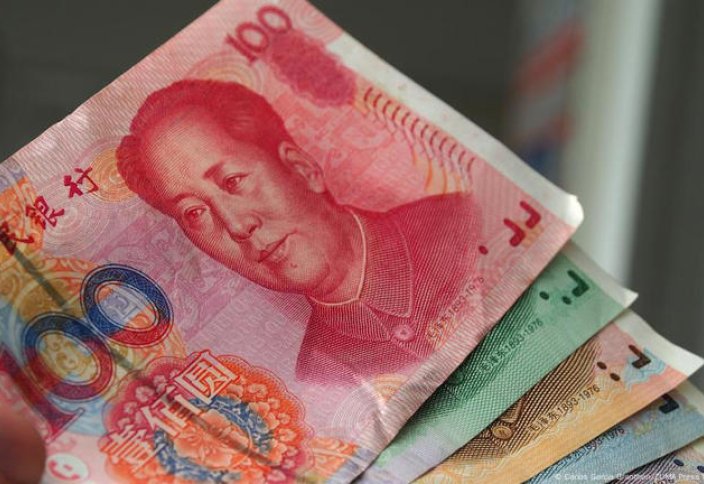
В настоящее время Китай рассчитывает почти треть своей торговли на сумму 6,2 триллиона долларов в юанях вместо долларов — по сравнению с 20% в 2022 году. Но экономические дисбалансы и жесткий контроль за движением капитала не позволят валюте по-настоящему узурпировать доллар США.
Стремление Китая снизить зависимость от доллара США выкристаллизовалось во время мирового финансового кризиса 2008–2009 годов.
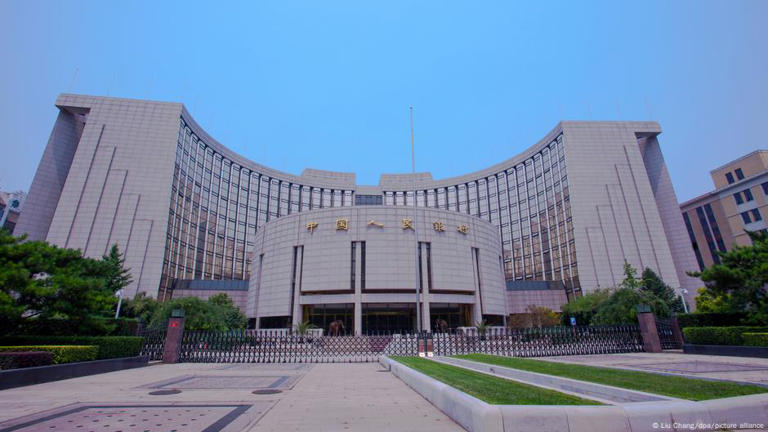
Встревоженный агрессивным печатанием денег Федеральной резервной системой США, которое угрожало стоимости иностранных активов Пекина в размере 1,9 триллиона долларов (1,65 триллиона евро), Народный банк Китая (НБК) в июле 2009 года впервые запустил пилотную схему для урегулирования трансграничной торговли в юанях или юанях.
Пилотный проект положил начало 16-летней кампании, в рамках которой юань используется для оплаты 30% мировой торговли товарами Китая на сумму 6,2 триллиона долларов, заявил заместитель управляющего Центрального банка Китая Чжу Хэсин на экономическом саммите в июне.
Если посчитать все трансграничные платежи, включая покупку облигаций и иностранные инвестиции, доля юаня подскочила до 53%, обогнав торговлю долларом Китая впервые в 2023 году.
Еще одной важной вехой стало то, что в прошлом году юань ненадолго обогнал евро в качестве второй наиболее используемой валюты в глобальном торговом финансировании, хотя и с 5,8% рынка против 82% доллара у доллара, согласно SWIFT, глобальной сети обмена сообщениями, которую банки используют для расчетов по международным платежам.
Доля юаня в мировых валютных резервах также достигла самого высокого уровня во втором квартале года в 2,4%, сообщил Международный валютный фонд (МВФ) в октябре.
Глобальная роль юаня растет, но с ограничениями
В то время как страны БРИКС Глобального Юга недавно изучали альтернативы доллару, в том числе предложения по созданию общей валюты, Китай занял более прагматичную позицию, неуклонно наращивая роль юаня в мировой торговле, сознательно сохраняя при этом контроль над обменом валют.
"Китай хочет, чтобы юань стал интернационализированным для торговли - для реальной экономики", - сказал DW Мигель Отеро-Иглесиас, старший научный сотрудник Королевского института Элькано в Мадриде, Испания. «Он меньше заинтересован в том, чтобы юань стал финансовой валютой».
По словам Отеро-Иглесиаса, если Пекин позволит использовать юань на мировых финансовых рынках для потоков капитала, инвестиций и финансовых инструментов, а также для торговли, это уменьшит контроль Коммунистической партии Китая над своей внутренней кредитной системой.
"Beijing believes finance needs to be the slave and not master of the real economy," he added.
Headlines often frame the yuan’s recent rise as a direct challenge to the dominance of the dollar, for nearly 80 years the global reserve currency and still used in over 58% of international transactions and foreign exchange reserves.
But Dan Wang, China director at the political risk consultancy Eurasia Group, sees a more restrained reality.
“Beijing has never called it dedollarization," Wang told DW. "A more accurate description of China's intention is the regionalization of the yuan [toward the Global South]."
Over the past three years, China has leveraged its vast economic clout and the geopolitical fallout from the Ukraine war to secure favorable energy and commodity deals — including steep discounts from Russia — with an increasing share settled in yuan.
"Over time, especially when China has the negotiating power, it could ask for a higher ratio [of trade in yuan]. That's what Chinese state-owned enterprises are already doing with foreign commodity suppliers," Wang said.
Ключевая роль юаня в долговом финансировании
A second pillar of Beijing's efforts to boost the use of the yuan is overseas lending, which embeds the Chinese currency in the debt structures of developing countries.
Chinese banks' external yuan holdings — loans, deposits and bonds — have quadrupled to $480 billion in five years, according to the Financial Times, representing a growing slice of China's roughly $1 trillion in outward lending through the country's Belt and Road Initiative (BRI).
With yuan interest rates 200–300 basis points below dollar levels, the business daily noted that Kenya, Angola and Ethiopia have converted old dollar debts into yuan this year, while Indonesia, Slovenia and Kazakhstan are now issuing bonds in the Chinese currency.
Beyond trade and lending, Beijing has built a third line of defense: a separate financial architecture that can operate independently of dollar-dominated systems. At the heart is CIPS, China’s Cross-Border Interbank Payment System, which offers an alternative to SWIFT for international transactions.
In major financial hubs like Singapore, London, and Frankfurt, yuan clearing hubs have been opened. The PBOC is also piloting the digital yuan, a central bank digital currency (CBDC). With access expanded to more than 20 countries, the digital yuan is set to further streamline cross-border payments and reduce reliance on Western banks.
“This could be another channel whereby China internationalizes its currency by being a pioneer at the avant-garde of digital sovereign money," Otero-Iglesias told DW.
China has also signed currency swap deals with more than 50 countries. These agreements enable central banks to exchange their local currencies for yuan on demand, giving the likes of Russia and Iran a critical hedge against US sanctions that have blocked access to the dollar.
They're also a boon for countries that depend on Chinese trade and investment, like Argentina, Pakistan and Turkey.
Пекин сохранит железную хватку юаня
Unlike Western currencies, the yuan remains tightly managed by Beijing and can't be freely exchanged for other currencies without government oversight.
China's domestic credit system is still largely directed by state-owned banks under political supervision. Beijing is wary that allowing unrestricted flows of money in and out of the country could expose the Chinese currency to speculative attacks and other foreign influence. So full convertibility remains off the table.
“Beijing is not going to take a liberal approach," Otero-Iglesias told DW. "The internationalization of the yuan will follow the Chinese Communist Party logic of command and control."
But without full convertibility, the yuan is unlikely to become a dominant financial currency used for global investment and reserves. Indeed, Beijing’s cautious strategy may limit how far the yuan can go.
The push to expand yuan-based trade also faces headwinds from China's own economic imbalances. Domestic demand is weakening, with consumers and businesses spending less, partly due to a worsening real-estate crash.
Chinese factories are producing more than the country needs, so Beijing must rely more heavily on exports to drive its economy. Without consistent foreign demand, as a result of US President Donald Trump's tariff war, the growth of yuan-denominated trade could stall.
"The growth has to come from overseas," Eurasia Group's Wang said. "That means global trade now becomes even more important to China."
If China demands that more deals are settled in its own currency, trading partners must be willing to accept it, which analysts say will require more trust, transparent institutions and a stronger economy.
Редактор: Уве Хесслер
Author: Nik Martin