






|
Засуха подталкивает нигерийских фермеров к революции безпочвенного земледелия
|
По мере роста цен на продукты питания и сокращения сельскохозяйственных земель новое поколение нигерийских фермеров обращается к инновациям — от гидропонных систем до цифрового орошения, чтобы выращивать больше с меньшими затратами, пишет ДЖОЗЕФИНА ОГУНДЕДЖИ
Нванчукву Успех никогда не выбирал сельское хозяйство; это был пульс выживания, который она унаследовала с рождения. Выросшая в штате Имо, она наблюдала, как её родители поднимаются на рассвете, уговаривая маниоку и овощи из уставшей земли.
«Как будто мои братья и я не особо любили фермерство», — призналась она, голос дрожал, словно каждое слово несло в себе тяжесть лет под палящим солнцем. «Но они продолжали, потому что не имели выбора; Это был семейный бизнес. И я... Я чувствовал, что у меня там нет будущего, нет пути, кроме как наблюдать, терпеть, пока мои руки и тело несли безмолвные следы жизни, которую я не выбирал.» Она провела пальцем по едва заметным шрамам, выгравированным на ладонях, каждый из которых был историей борьбы, боли и выживания.
Бесконечные часы прополки под палящим солнцем оставили её спина болящей, а решимость — слабой. Но когда изменение климата начало искажать осадки, заполнять почву и превращать когда-то плодородные земли в бесплодие, ставки её работы стали невозможно игнорировать. «Это перестало быть просто работой; это стало выживанием», — добавила она.
«Часы, проведённые под палящим солнцем, руки были обнажены, спина кричала, талия сжалась от боли, я чувствовала себя раздавленной, задыхающейся этим. Каждая сорняка, которую я вырывала, напоминала мне, что эта жизнь не моя. Но теперь, когда непредсказуемые дожди и палящие засухи уничтожали то немногое, что мы могли вырастить, я понял, что у меня нет выбора. Фермерство было не просто работой; Это был единственный способ выжить», — рассказала она нашему корреспонденту.
Даже когда она уехала с фермы в школу, тень голода так и не исчезла полностью. Она наблюдала, как соседские столы пустели в засушливые сезоны, рынки опустели из-за засух, а дети ложились спать с болью в животе.
«Я раньше удивлялась, почему мы так усердно работали, а потом видела, как многие голодают», — вспоминала она.
Её занятия по аграрной экономике, иронично, вернули её в ту самую почву, из которой она когда-то пыталась выбраться. «Это было похоже на то, будто тебя приковали к жизни, которую я думала, что оставила позади», — призналась она.
Но в этом напряжении между нежеланием и ответственностью её занятия по аграрной экономике вернули её обратно в ту самую почву, от которой она пыталась выбраться.
Жара, голод и выживание
Согласно докладу Cheetahs Policy Institute, изменение климата представляет серьёзные угрозы продовольственной безопасности в Нигерии.
«Этот всплеск вызван рекордной инфляцией, продолжающимися конфликтами и климатическими катастрофами. Нигерийские политики должны признать, как климатические экстремулы, засухи, жара и наводнения взаимодействуют с социально-экономическими факторами, чтобы подпитывать голод.
«Сельское хозяйство Нигерии, в основном зависящее от дождей, крайне уязвимо. Повышение температуры и нерегулярные осадки усилили опустынивание и засухи на севере, а наводнения в Среднем поясе и на юге, усугублённые разливами нефти, создали серьёзный продовольственный кризис. Наводнения и другие климатические потрясения повышают цены на продукты питания и сокращают их доступность.
«Ещё до климатических потрясений Нигерия боролась с голодом. Изменение климата усиливает продовольственную небезопасность — от сокращения урожая до стремительного роста цен. Расширяя климатически разумное сельское хозяйство, инвестируя в орошение и инфраструктуру, а также давая фермерам возможность защищать свои продовольственные системы.»
Всемирная организация здравоохранения предупредила, что изменение климата угрожает чистому воздуху, безопасной воде, питательной еде и безопасному укрытию в Нигерии.
Анализ ООН 2024 года прогнозирует, что 33,1 миллиона нигерийцев сталкиваются с высокой продовольственной нестабильностью в сезон голода 2025 года, что на семь миллионов больше, чем в предыдущем году. Около 5,4 миллиона детей младше пяти лет и 800 000 беременных или кормящих женщин сталкиваются с острым недоеданием, при этом до 1,8 миллиона детей находятся в группе риска тяжелого недоедания без неотложной помощи.
Активист по борьбе с изменением климата Яхуза Исмаил заявил, что небезопасность и конфликты, в сочетании с изменением климата, усугубляют продовольственную небезопасность в Борно и северной Нигерии.
«Чтобы решить эту проблему, мы должны масштабировать безпочвенное и умное земледелие. Поддержка фермеров в внедрении устойчивых систем по доступным ценам может увеличить производство продуктов питания и скота. В некоторых районах Борно женщины выполняют большую часть сельскохозяйственной работы, так как мужчины избегают фермерства из-за риска похищения. Решения включают безпочвенное земледелие, умное сельское хозяйство и домашнее земледелие.
«Рост стоимости удобрений также является серьёзной проблемой, которая приводит к росту цен на скот. Нам нужны улучшение орошения, программы устойчивости к засухе, поддержка политики и устойчивое управление землями. Взаимодействие правительства крайне важно, чтобы помочь фермерам внедрять эти инициативы.»
Пустые тарелки, растущее число
Продовольственная и сельскохозяйственная организация сообщила, что последние данные по продовольственной небезопасности свидетельствуют о постоянных угрозах жизни 30,6 миллиона человек.
«Правительство Нигерии, работая с Продовольственной и сельскохозяйственной организацией, а также партнёрами из сектора продовольственной безопасности, опубликовало последний доклад Cadre Harmonisé, раскрывающий углубляющийся кризис в области продовольствия и питания. Оценка показывает, что 30,6 миллиона человек в 26 штатах и ФСТ сталкиваются с острым дефицитом продовольствия и питания в кризисном состоянии (CH Фаза 3) или даже хуже. Хотя анализ был немного ниже ранее заявленных 33,1 миллиона, ограниченный доступ к данным повлиял на анализ. Нигерия по-прежнему занимает самое большое количество людей с продовольственной незащитой в мире, с тревожно высоким уровнем острого недоедания — что подчёркивает острую необходимость устойчивых, скоординированных действий.
“Current findings indicate that there are no populations classified in Catastrophe (Phase 5); the population classified as Emergency (CH Phase 4) is expected to rise from 680,000 (March–May 2025) to 1.2 million (June–August), a 43 per cent increase, with the northwestern states of Zamfara (400,000), Sokoto (183,000) and Katsina (130,000) most affected, followed by northeastern states Borno (146,000) and Yobe (133,000). Kaduna in the North-Central records 100,000.
“Together, the Borno, Adamawa, and Yobe (BAY) States account for 15 per cent (3.7 million people) of Nigeria’s food-insecure population, while the northwest represents 17 per cent (4.2 million). Without sustained intervention, these figures are expected to rise to 4.6 million (BAY) and five million (North-West) during the lean season.
“Drivers of escalating food insecurity include sustained insecurity due to insurgency and communal clashes, economic hardship and shocks, and climate hazards. Other notable hunger hotspots include large parts of Benue, Kwara, and Kaduna, and parts of Taraba and Cross River, where populations increasingly experience high food consumption gaps due to economic shocks, conflict, and deteriorating livelihoods.”
Following the release, the Director of Food and Strategic Reserve, Dr Onyema Okwudili, representing the Permanent Secretary of the Federal Ministry of Agriculture and Food Security, Dr. Marcus Ogunbiyi, said, “These results present the outcome of the state of our country’s food and nutrition security situation, particularly in this phase of economic stress when the majority of the population are still experiencing the shock of fuel subsidy removal and insecurity in food production, processing, storage and distribution.”
Meanwhile, Humanitarian Action stated that in 2025, the Food Security Sector requires $362m to support 2.8 million people needing food assistance, 2.3 million needing urgent agricultural inputs, and 105,000 requiring preparedness measures.
“This funding estimate is based on activity-based costing, aligned with the projected number of beneficiaries in targeted Local Government Areas across Borno, Adamawa, and Yobe States. The breakdown includes $282m for food assistance, $70m for emergency agricultural support, and $10m for anticipatory actions.
“The estimated cost for food assistance represents a three per cent reduction compared to the previous year, despite serving the same number of beneficiaries, reflecting efforts to improve cost-efficiency in FSS operations. In contrast, the funding requirement for emergency agricultural support has increased by 40 per cent due to the country’s 33 per cent inflation rate and an eight per cent increase in food-insecure people needing sustainable, agriculture-based solutions. These measures aim to reduce dependence on food aid, particularly in regions where farmland is accessible.”
Миллионы голодают, несмотря на импорт
Despite spending $2.39bn on food imports between April 2024 and March 2025, millions of Nigerian children still go to school hungry. Analysis of the Central Bank of Nigeria’s data shows food imports rose by $248.37m, or 11.6 per cent, from $2.14bn in 2023–2024, highlighting growing dependence on imports despite agricultural interventions.
Experts cite insecurity, poor mechanisation, and low adoption of modern farming technology.
Nutritionists warn that rising hunger is worsening malnutrition among children under five, leaving many of them stunted, anaemic, and going to school on an empty stomach, which affects their immunity and concentration.
The former president of the Federation of African Nutrition Societies, Prof Ngozi Nnam, told our correspondent that the economic situation in the country would have a devastating impact on children. Nnam said, “Most children now go to school on an empty stomach because of the economic crunch. They can’t concentrate in class, their IQ may drop, and their cognitive development will suffer. Many families go to bed hungry. Food is expensive, and some families can’t afford one meal a day.”
Even as hunger tightens its grip, a quiet revolution is sprouting. From warehouses in Lagos to greenhouses in Abeokuta, Ogun State, young innovators are turning to soilless farming to outsmart the crisis. By using nutrient-rich water and controlled environments, they show that Nigeria’s battle against hunger may lie in innovation, not land. Hydroponics, aquaponics, and vertical farms are redefining food production amid insecurity and climate extremes.
Still, the question remains: will the country’s leaders invest in these emerging technologies fast enough to feed a population that can no longer afford to wait?
Безпочвенное земледелие на помощь
As farmlands shrink and rains grow increasingly unpredictable, Nigerian farmers are turning to soilless farming to protect both their harvests and livelihoods.
Soilless farming grows plants without traditional soil, using nutrient-rich water, sand, or other mediums to feed the roots directly. Hydroponics uses nutrient-infused water, aquaponics pairs it with fish farming, and vertical farming stacks crops indoors to maximise space. Digital irrigation systems further improve precision and reduce waste.
When powered by renewable energy, using organic nutrients and recycling water, soilless farming becomes a green practice, cutting land degradation, water waste, and carbon emissions.
These innovations are reshaping agriculture in Nigeria, helping farmers grow more with less: less water, less land, and less vulnerability to failing soils and erratic weather.
“Before we tried hydroponics, a single dry season could wipe out months of hard work,” says Joshua Olajubu, a young farmer in Ogun State. “Now, even when the rains fail, I can still harvest enough to feed my family and sell to the market.”
Фермеры реагируют
“When I started cassava farming, I invested about $1,000. After one year, the return was only around $1,100, a profit margin too small to justify the waiting period and risks. It made me realise I needed a more predictable system,” he explained.
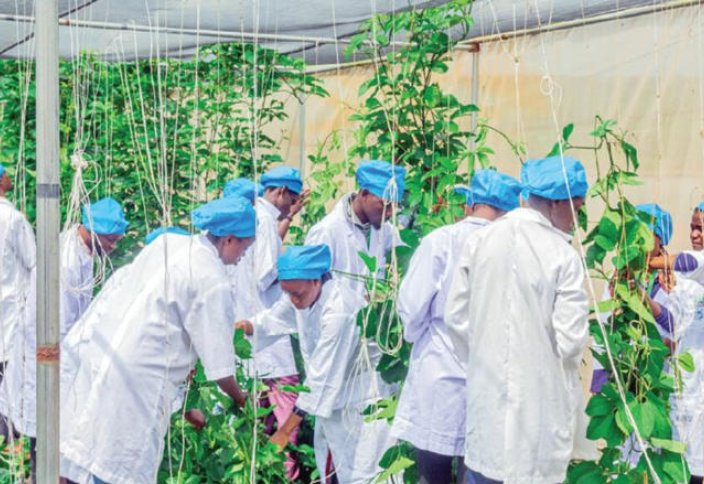
That realisation inspired him to venture into greenhouse farming after being selected for the Enterprises for Youth in Agriculture programme by Soilless Farmlab, funded by the MasterCard Foundation, where he learnt to produce crops with shorter cycles and more predictable yields.
“In greenhouse farming, everything is measured and managed. The number of plants is known, and with that, I can predict the total kilograms of produce. Unlike the open field, where you can’t tell what you’ll get, with the greenhouse, I know what I’ll harvest from each plant. For example, in habanero pepper cultivation, one plant in a greenhouse can yield between three and eight kilograms of fruit in the South-West.”
He emphasised that greenhouse crops are premium produce: fresh, uniform, and attractive, making them suitable for premium markets such as supermarkets like Shoprite or Justrite and restaurants that prioritise freshness.
“Open-field (local farming) produce may sell for N1,000–2,000 per kilogramme, but greenhouse produce can go for N3,000–7,000 per kilogramme because of its freshness and quality,” Joshua explained.
He added that open-field farming is cheaper to start but less sustainable, whereas greenhouse farming, though costlier upfront, is more scalable and predictable.
“Before, I struggled to find customers, but now my challenge is that I can’t meet all my customers’ demands.”
In an exclusive interview with The PUNCH, the Chief Executive Officer of Soilless Farm Lab, Samson Ogbole, noted that the adoption of greenhouse and soilless farming in Nigeria stemmed from the growing need to match the country’s rising population with a more efficient food production system.
“A greenhouse is a structure with walls and a roof made of transparent material like glass or plastic that traps heat from the sun, creating a controlled environment for growing plants. This allows plants to be cultivated year-round, protected from outside weather conditions, by maintaining a stable, warmer temperature than the exterior.”
Ogbole further explained that the trend of people leaving farming, particularly the youth, created an even greater urgency to introduce innovation into the sector.
Farming, he said, had become the preserve of the aged, and to attract younger generations, technology had to be embedded into the process.
He pointed out that the introduction of technology into agriculture has significantly improved productivity and yield.
He said, “In the past, a traditional farmer could do about 500 grams of tomatoes per plant in an open field. But with the advent of technology, that same farmer can now do two kilograms per plant. This advancement represents a major leap in efficiency, with technology making farming more precise, controlled, and profitable.”
Addressing irrigation and post-harvest losses, Ogbole explained that the soilless farming system was designed to reduce wastage through planned, controlled production.
“We have irrigation systems, most of which are gravity-fed. This means we rely less on electricity. Water is pumped into storage tanks, and from there, it flows naturally into the planting beds.”
According to Ogbole, the difference between greenhouse and open-field farming lies primarily in protection and control.
Greenhouse farming, he explained, is a system of protected cultivation designed to shield plants from adverse environmental effects.
A mechanical engineer turned farmer, Okugbo Moses, argued that if hunger was not seasonal, food production should not be either.
He said, “Before I came here, I saw farming as mere survival, just producing enough food so people wouldn’t go hungry. But when I got here, I realised farming could be about dominance. If Africa focuses on food production, we can become a superpower again.
“Soilless farming is changing agriculture completely. For instance, we use drip irrigation, which saves up to 80 per cent more water than traditional methods. In fact, during my research earlier this year, I discovered that the amount of water lost to improper irrigation in Nigeria was more than the Internally Generated Revenue of some urban states. That’s how wasteful the old system is.”
Commenting on the issue, a medical imaging technician turned farmer, Ayo Sodimu, said she never imagined herself as a farmer.
She expressed, “My early perception of farming came from home. My mother kept small vegetable beds, and my father cultivated cassava on a modest plot. Even though I grew up around farmland, I never enjoyed it. School farming activities were tough, basic, and exhausting, making agriculture feel tedious.
“When I arrived at the Soilless Farm Lab in Abeokuta, we didn’t begin with planting. Instead, we built greenhouses, carrying cement, iron, poles, and nets. It didn’t feel like farming at first, yet the work was structured, innovative, and surprisingly engaging. Gradually, as we moved into planting and managing crops, my interest grew. The blend of technology, hands-on learning, and the sense of creating something meaningful completely shifted my perspective.”
Интеграция современного сельского хозяйства в учебные программы
Speaking on the importance of integrating modern farming into school curricula, a farmer, Juliet Nworie, asserted there was an urgent need to modernise education, exposing children early to innovative agricultural careers alongside traditional professions.
She urged, “There is an urgent need to revamp the curriculum from the early years. Children should be exposed not just to familiar career paths like medicine, law, or engineering, but also to the wide opportunities in agriculture and its related fields.
“Right now, schools often teach outdated, manual practices that don’t reflect today’s technological advancements. While pupils learn basic techniques, innovators elsewhere are building advanced agricultural solutions. Modernising the curriculum and highlighting diverse careers in agriculture can inspire a new generation to see the sector as modern, valuable, and full of potential.”
Правительство реагирует
Федеральное правительство заявило, что недавнее снижение цен на ключевые продовольственные товары связано с целенаправленными рыночными вмешательствами, увеличением производства и устойчивыми инвестициями в сельское хозяйство. Министр сельского хозяйства и продовольственной безопасности Абубакар Кяри сообщил об этом на 47-м регулярном заседании Национального совета по сельскому хозяйству и продовольственной безопасности в Кадуне 6 ноября 2025 года.
Он сказал: «Первым шагом к продовольственному суверенитету является обеспечение стабильного, высокопродуктивного производства через своевременный доступ к качественным и доступным ресурсам. Министерство в сотрудничестве с Африканским банком развития и правительствами штатов укрепило Национальную схему сельского хозяйства — Agro-Pocket как флагманскую программу Нигерии по внедрению материалов и увеличению производительности. Благодаря этой программе производство пшеницы выросло с 15 штатов в сухом сезоне 2023/2024 до более широкого охватения в 2024/2025 годах, что увеличило производственные мощности и самодостаточность в ключевых основных продуктах.»
Он призвал внедрять климатически разумные практики для повышения урожайности и повышения устойчивости.
Кяри также объявил, что Банк сельского хозяйства получил одобрение на рекапитализацию в размере 1,5 триллиона найр и дополнительное окно финансирования в размере 250 млрд найр для мелких фермеров.